
Not only do I like to create pretty things, I also like to wear pretty things! ^_^ I found my old medieval veil a bit boring, so I decided to create a prettier one: one with ruffles.
This type of veil was very popular in the Dutch regions around 1350. So the time period will match perfectly with my cotehardie outfit. I’m not sure however what it is called in Dutch, nor in English. Online I’ve found it to be called either ‘ruffled veil’, ‘rushed veil’ or ‘frilled veil’. But in German, this type of veil is called a ‘Kruseler‘.
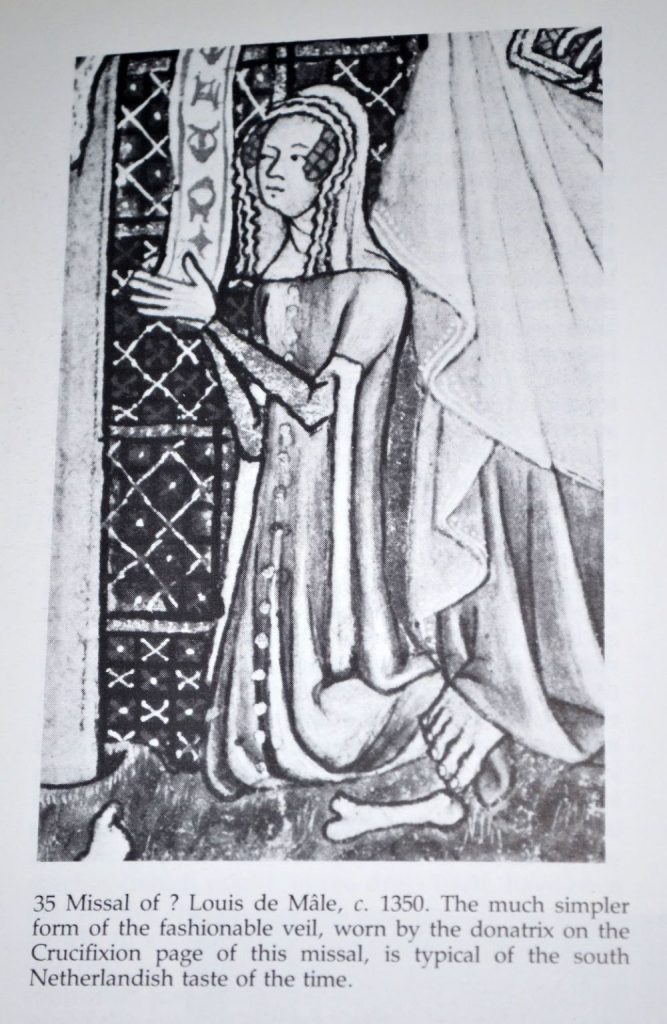
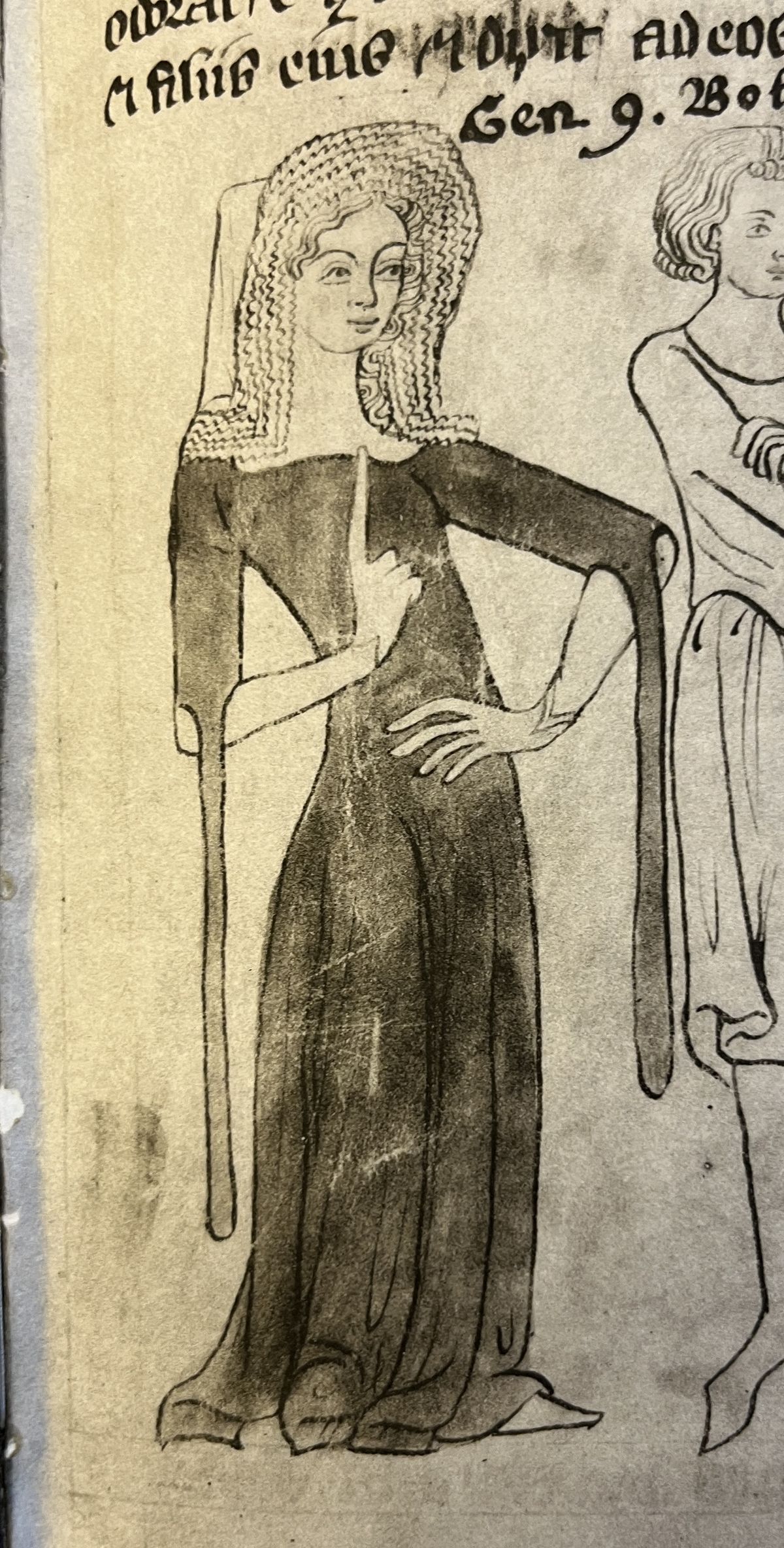
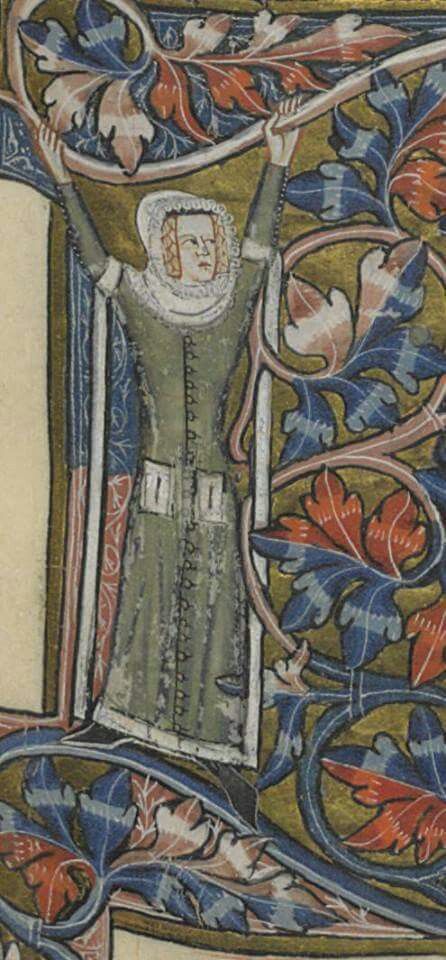
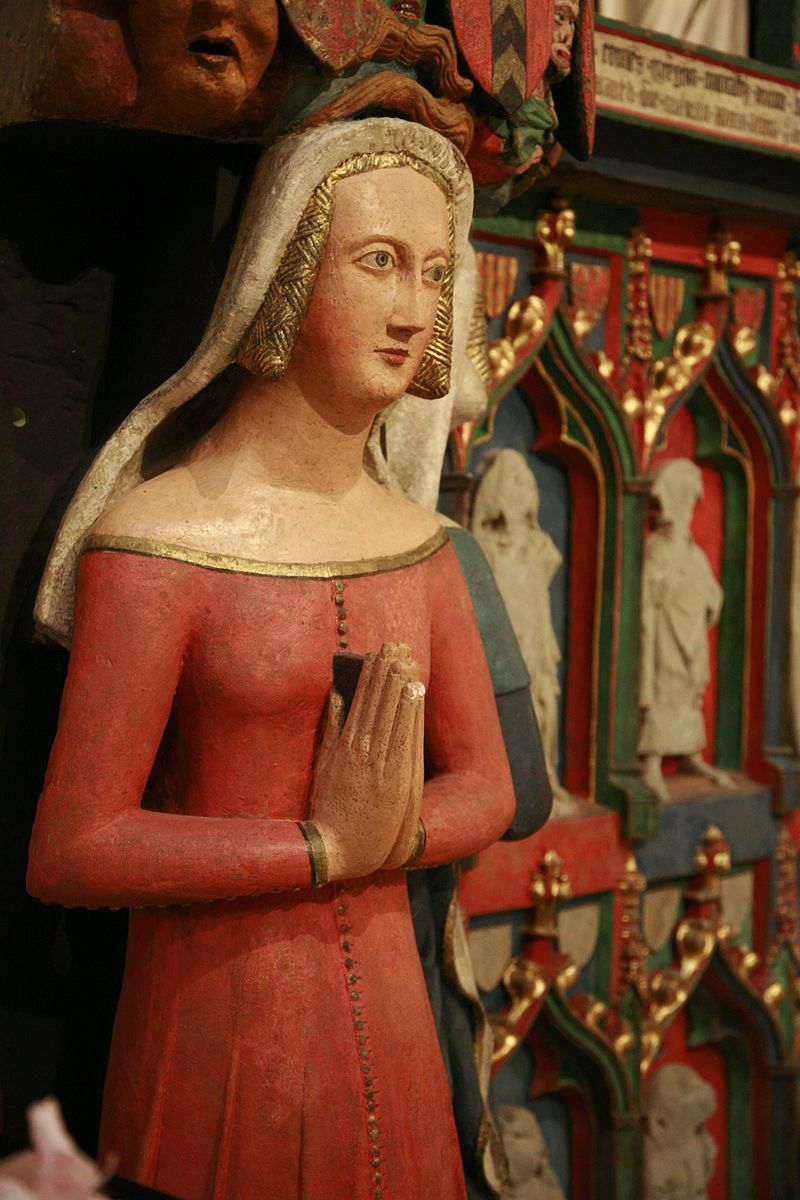
Here are some more medieval images showing this type of ruched veil:

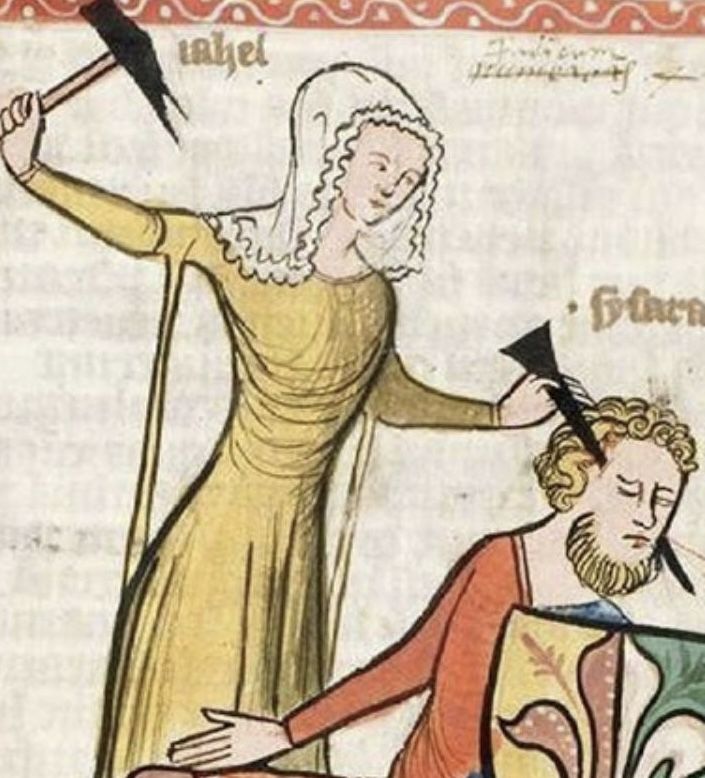
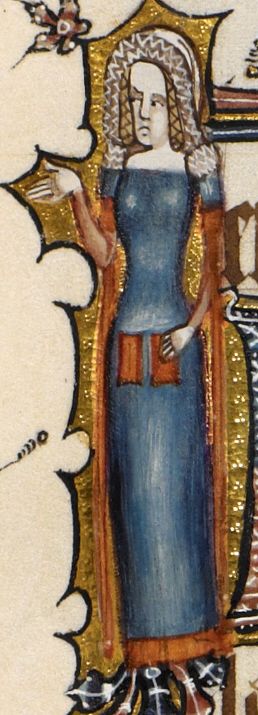

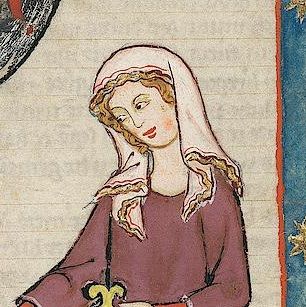
Ofcourse there were several variants of this veil. There were differences in the shape of the veil, whether the frills were only on the front side or all round, as well as the number of layers with frills.
There is also debate about the way they are made. Almost none have survived, except for one, if I may trust my sources, and that one is entirely woven. You do this by incorporating more threads along the edge of the fabric, causing it to fold naturally. Like this reproduction:

Beautiful and guaranteed authentic, but outrageously expensive – online they sell for an average of around €200 apiece. Logical, because handiwork takes time, but personally I’m not willing to spend that much on it, because right now, I see myself more as a musician wanting to fit the atmosphere of medieval festivals than as a hardcore reenactor.
Fortunately, there appear to be pictures and images where it looks as if there is a seam in the veil, implying that the ruffles were sewn on. In this blog post, they show several of them, and the argument that it is impossible to weave ruffles all the way around the veil if it is in the shape of a semicircle, and that I don’t think it is feasible to achieve that tightly pleated version by weaving alone, reinforces my belief that there were variations in the method of making. So I went for the attached ruffles.
I started out with sewing together several strips of linen and hemming both ends. Then I folded it over and ironed it flat, so the hemmed edges were lying on top of eachother and there was a fold on the other side of the strip.
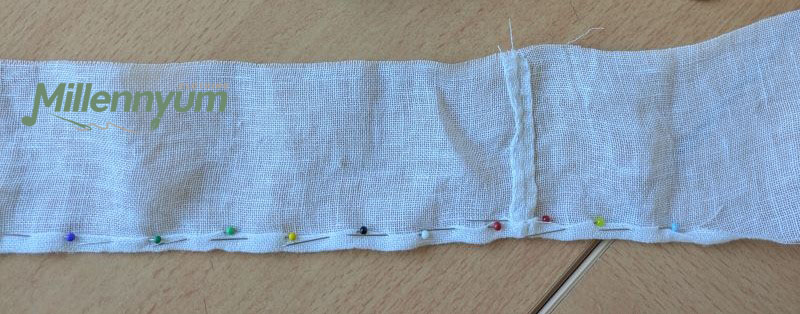
After that, I loosely sewed a thread through the strip, which allowed me to pull the fabric together.
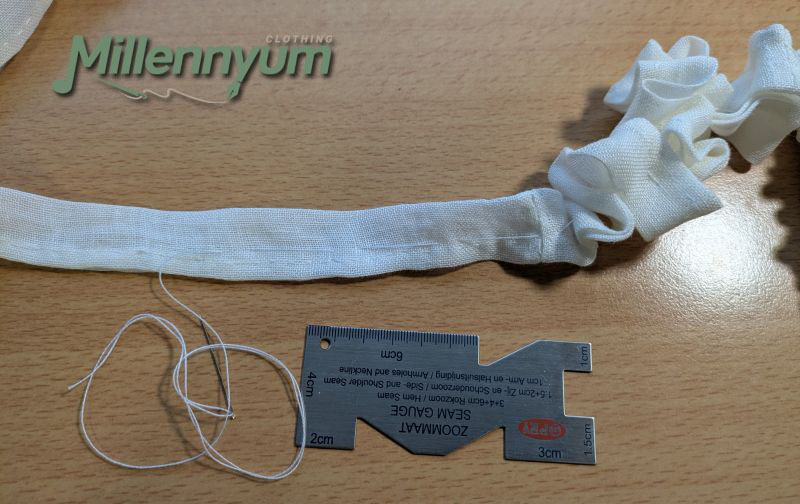
And then I hand-stitched the ruffled strip with the folded edge to the edge of the veil.
Now, this probably sounds like I had thought everything through completely beforehand, but that wasn’t the case… Initially, I made a version where the pleats are sewn tightly together.
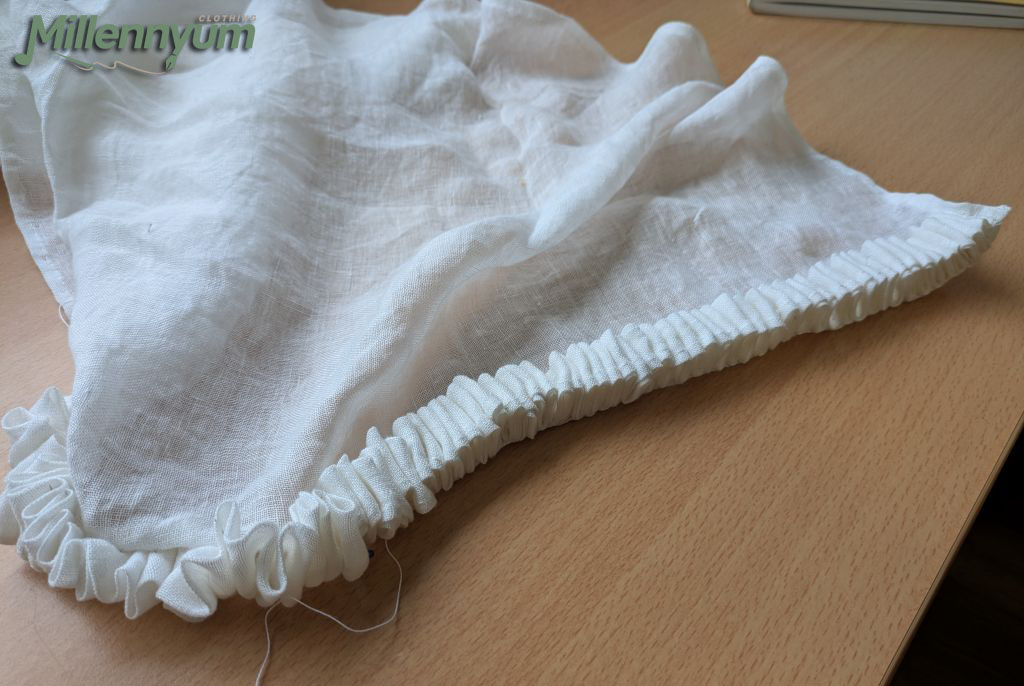
But when I had half finished it, and tried it in front of a mirror, I found it less pretty than I had hoped. Also, I feared this mass of fabric would cause my straw hat to not fit around my head anymore.

So I took out the stitchings and tried anew, this time pulling the strip of linen less tightly together. Instead of gathering the strip to one third of its length, I now only took it in half (so I cut the strip of fabric to be double instead of two thirds of the lenth of the veil’s edge.) This caused the ruffles to be much more subtle.

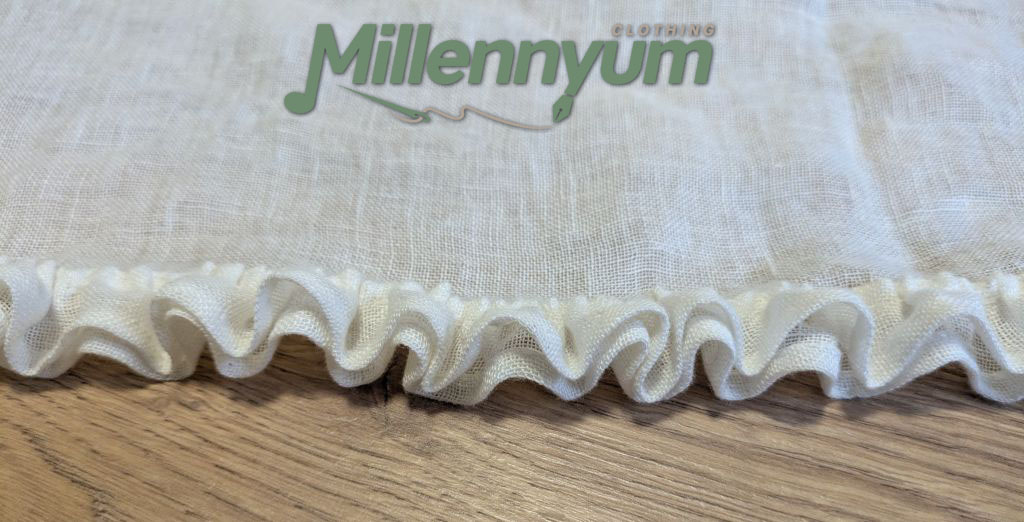
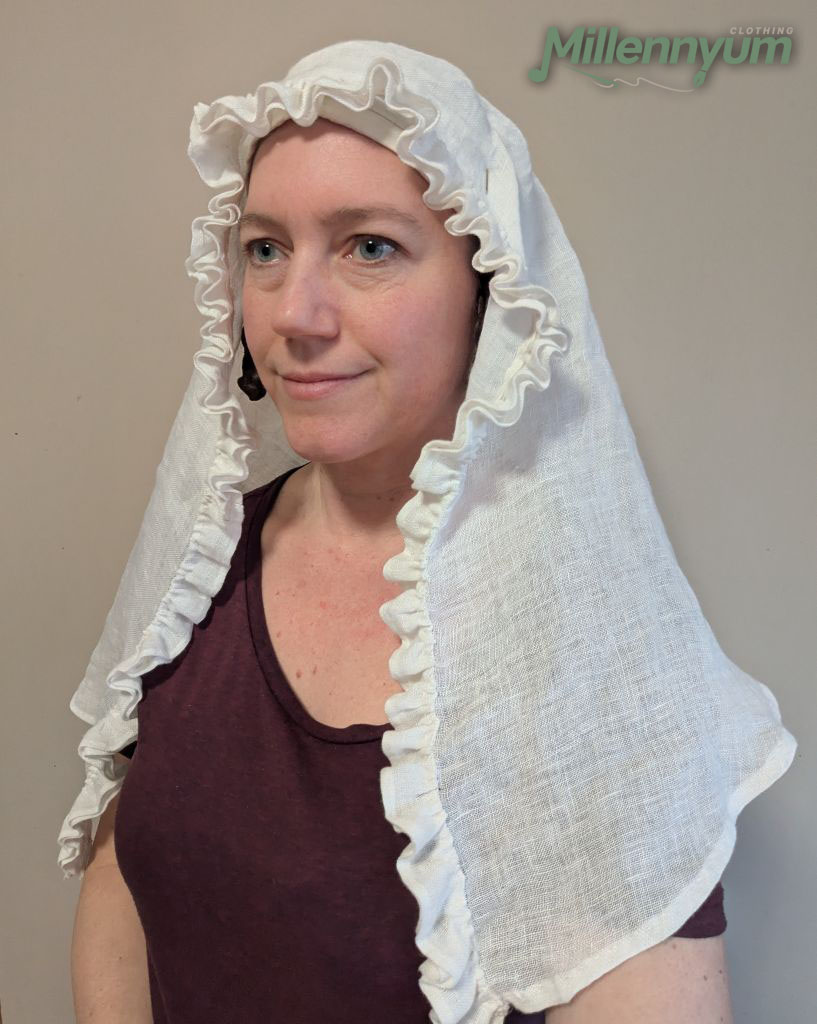
My version only has two lines of frills, but you could sew another strip to the bottom of the veil, creating three, four, or more even more layers. This would also prevent the hemmed edge of the veil from showing on the inside, although I wouldn’t say this is an issue. Alternatively, you could create a very long veil and fold it over – but this will ofcourse only work with rectangular veils, not semi-circles.