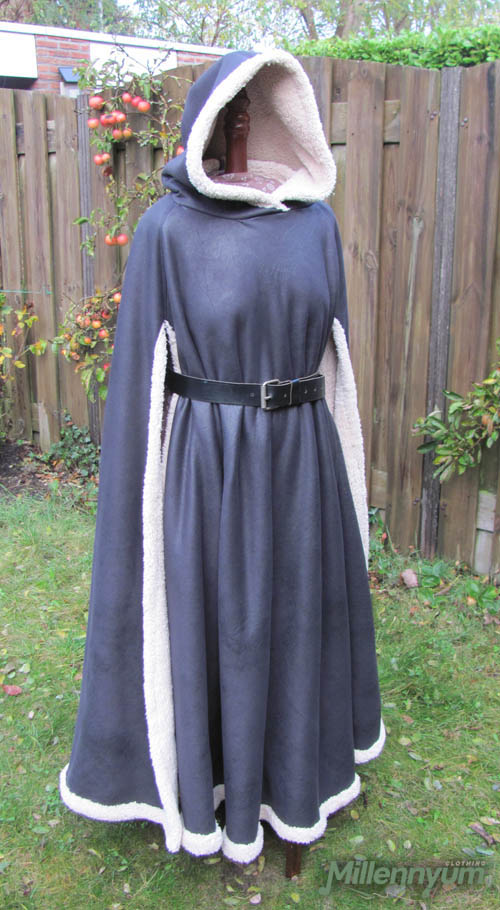
During medieval events it often gets rather cold, especially in the evenings after closing time, when you’re sitting by a campfire in your encampment. In medieval times they would often wear a gardecorpse (or gardecorps / garde corps) when travelling. It looked to me as the ideal cosy garment for those situations – somewhat like our modern hoodies, only longer. 😊
I had to do quite some research about how this garment was made myself, because I hardly (if ever) see other re-enactors wear a gardecorpse. I don’t know why; I can really recommend them!
Apparently, initially the garment was worn by men only, but later women also started wearing them. I don’t know if it is entirely historically accurate to wear one myself, since the images I could find of women in gardecorpses all appear to be of ladies of high standing and my character is not, but as there are images of lower class men in gardecorpses, I assume that lower class women could wear them too.
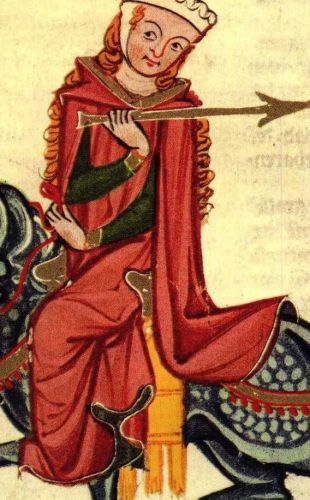
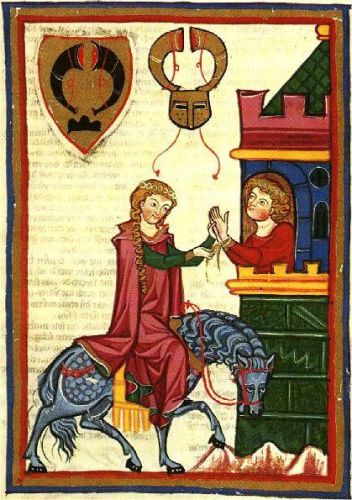
It is practically a long robe that can come in various forms:
- long or short sleeves;
- sleeves that are little more than a loose piece of cloth hanging from the shoulder seam over your arm, sleeves that are closed only at the bottom and hang loosely over a large slit in the side at the top, or sleeves that are fully closed but have a slit at the top through which you can stick your arms;
- a loose hood or an integrated hood.
Because I was going for warmth, I opted for a model with long closed sleeves with a split, and an integrated hood.
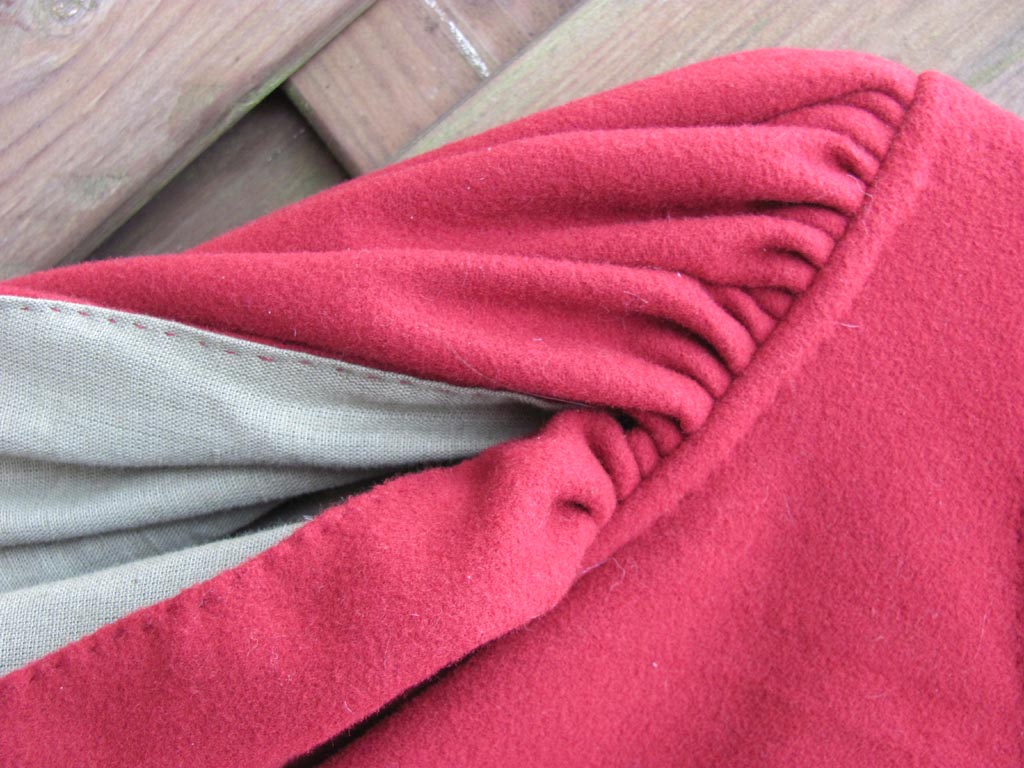
In the images below, you can clearly see how such a closed sleeve with a slit is constructed: it’s quite a lot of fabric, which is pleated at the shoulder seam.


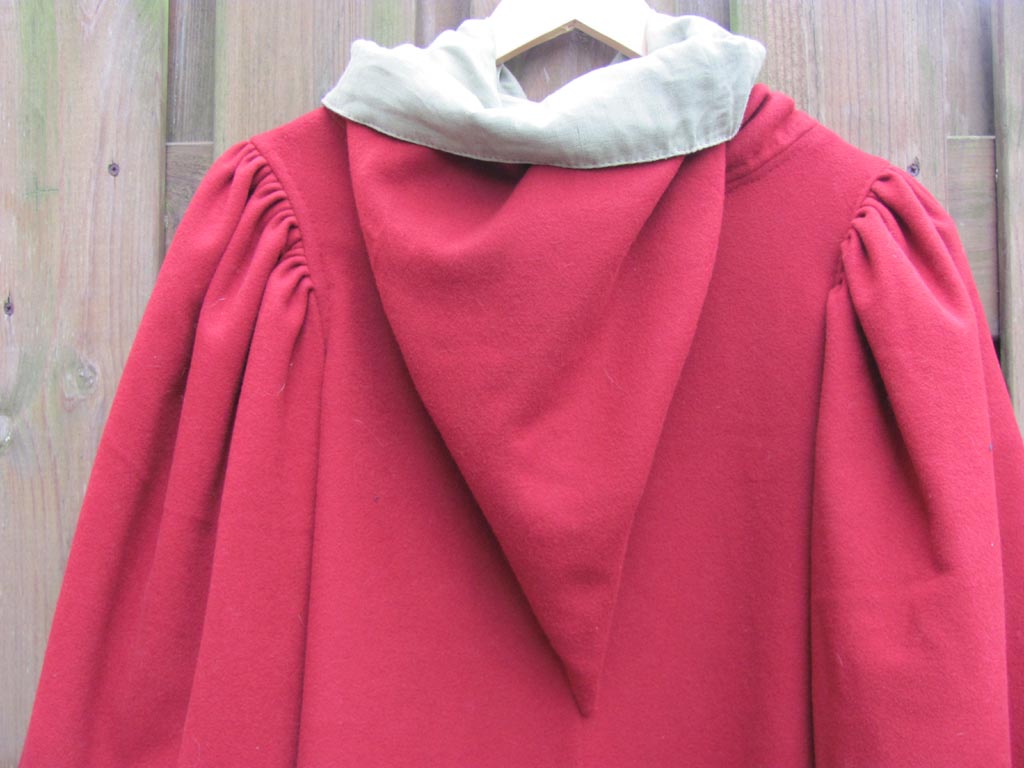
On these images, you can very clearly see the sleeve split:


I chose a red wool for the outside and green linen for the lining. And this is the result:

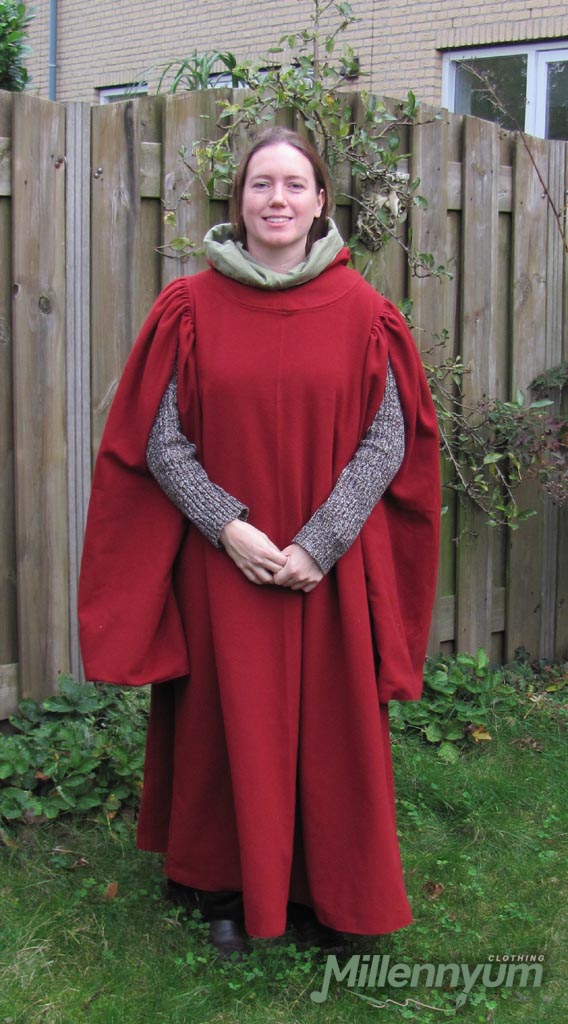
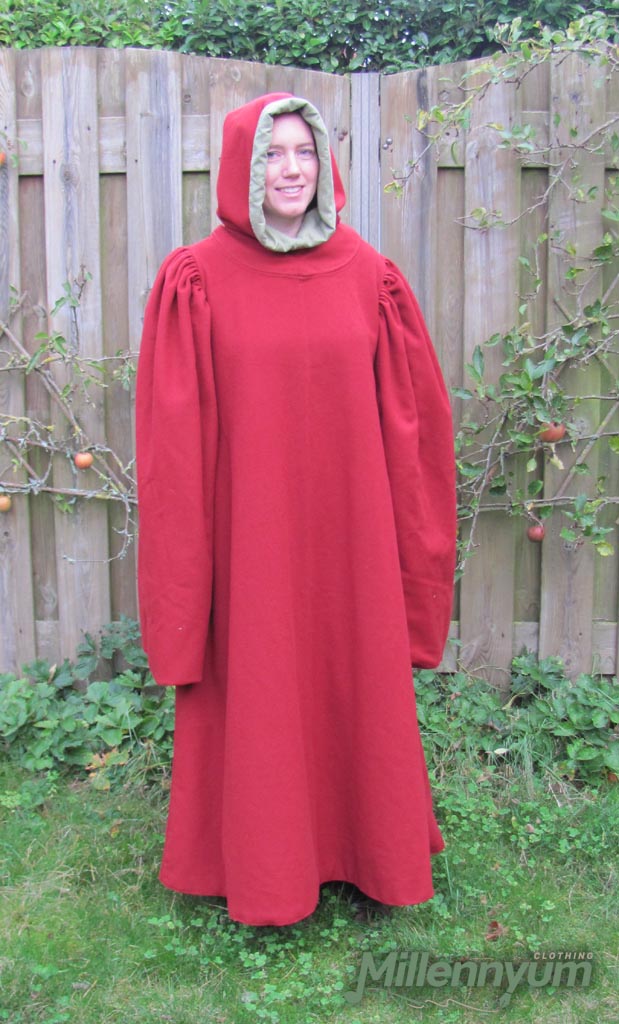
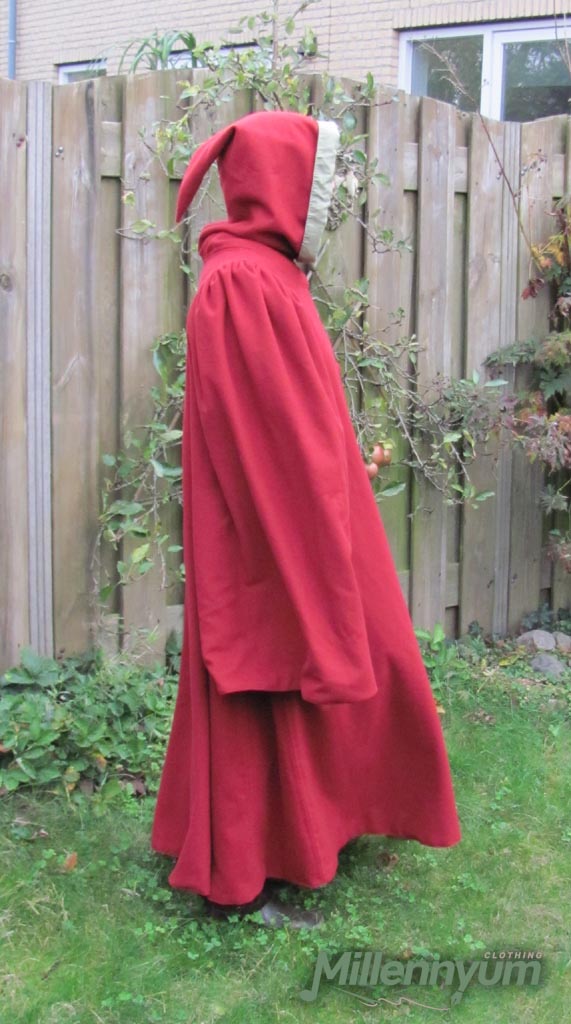
As you can see, it isn’t super flattering or body-fit, but then again, multiple layers of woolen dresses need to fit underneath, and besides: air insulates.
Lacking a pattern, it took a bit of puzzling, but the construction itself isn’t particularly special. The front and back are flared pieces, and I inserted gores in the side seams.

I significantly lengthened and widened a standard sleeve pattern and enlarged the sleeve head so that I could pleat it. I indicated the position of the slit by eye with pins, after the sleeve was already in the jacket. I then transferred that line back onto the pattern, after which I cut the sleeve from the lining. Once the lining was in place, I cut open the outer fabric based on the location of the slit in the lining to ensure that the slits were in the same place (it is very difficult to match them beforehand, especially because of all the pleats).
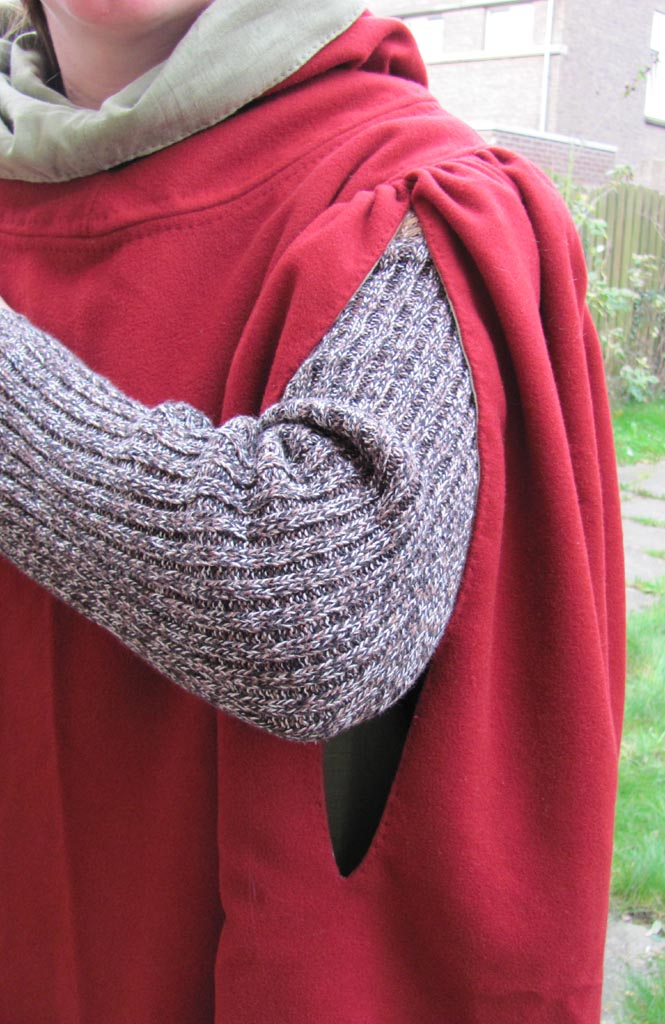
I made the hood based on a pattern I drew in the past, and pinned it against the neckline somewhat by feel, adjusting it on the spot. And based on the fabric that was cut away, I adjusted my pattern so that the lining of the hood fit perfectly the first time.
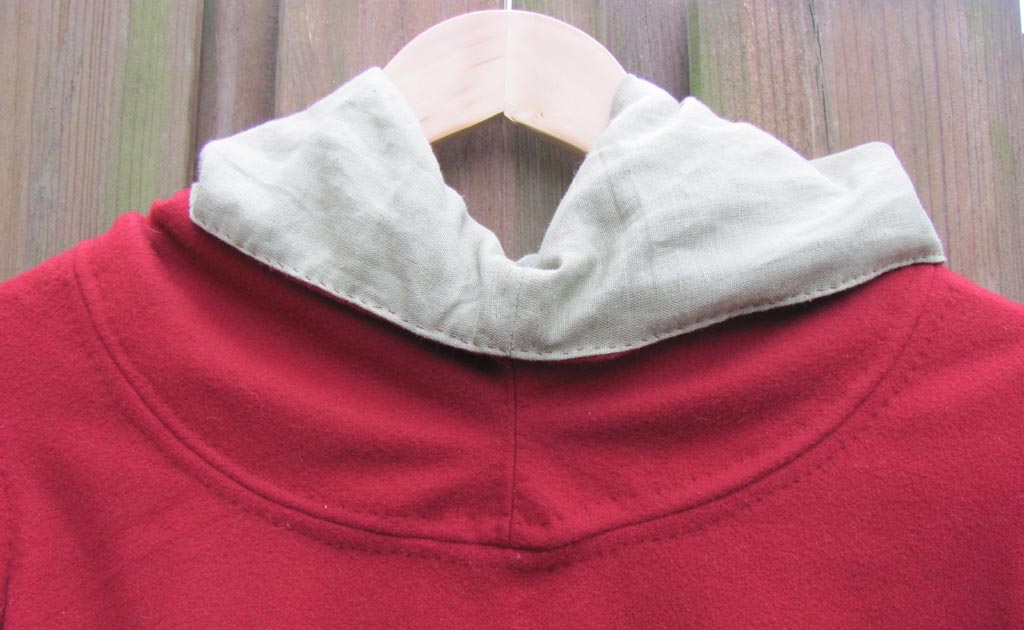
All outer seams are stitched open by hand. All hems are also hand-stitched. I only stitched the seams in the lining open in visible places (such as at the hood) and in places where it was functional (at the pleats in the shoulder seam), because I thought it was a waste of time otherwise and linen holds up well when ironed, unlike thick wool.
Time spent: 32 hours and 15 minutes
Costs: €117 (6 meters of green linen lining at €3.50 p/m + 6 meters of red wool at €16 p/m; I already had yarn lying around)
So even though this wool was actually quite cheap, when your garment needs so much length, it really adds up…
After wearing it a couple of times, I decided the garment looked a bit boring, so I added embroidery along the neckline and bottom seam, using a green woolen yarn that matches very well with the lining:
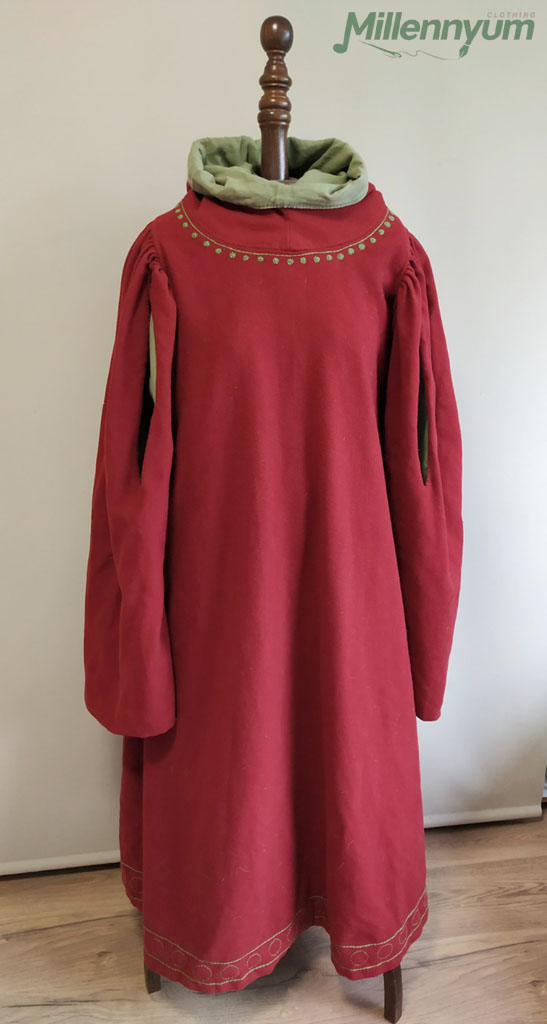
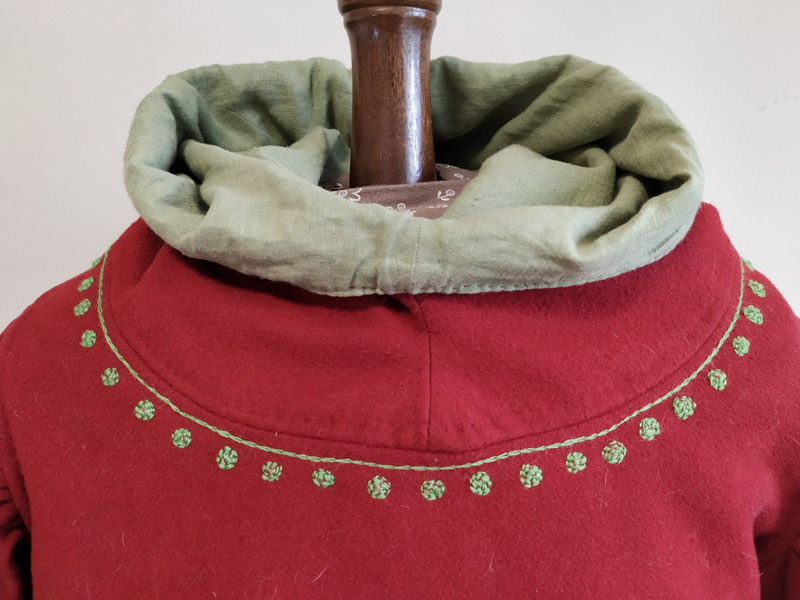
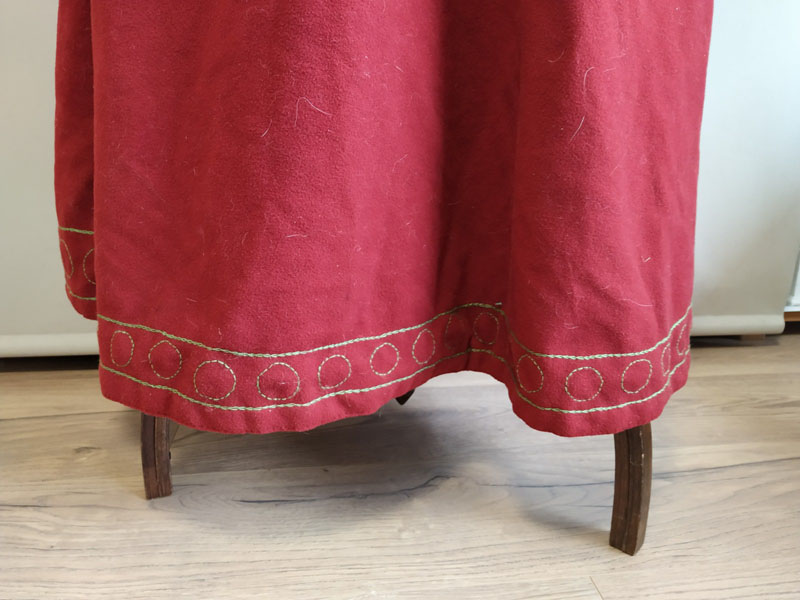
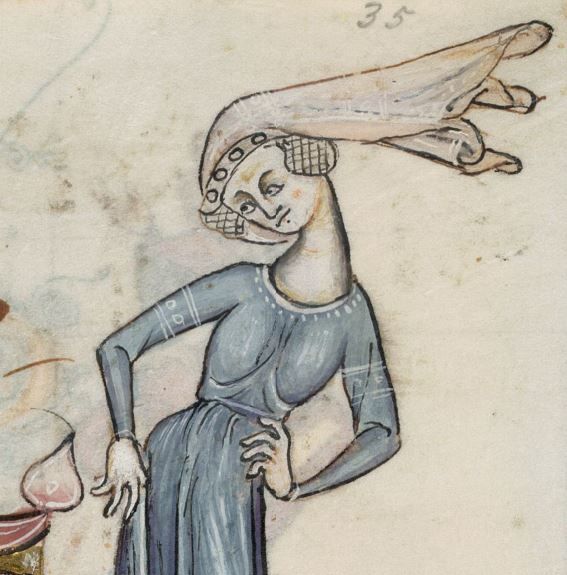
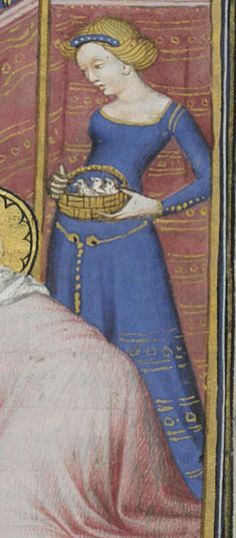
I based the motifs on those I often saw recurring in images of clothing in medieval manuscripts. I have no idea if they were actually embroidered on clothing, because the artists could of course have drawn them this way out of laziness and because ‘everyone draws them this way’, instead of basing them on reality. In any case, these patterns were easy to embroider, as I have little embroidery experience.
So, now I’m definitely ready for cold weather!
Related Posts