
I wanted something cozy for my home and decided to make a patchwork blanket. When it gets really cold at night, I sometimes put my second duvet on the bed, but a duvet without a cover doesn’t look very cozy, so I could use a nice blanket that matched my bedroom. That’s when the quest to find The Perfect Patchwork Combination began!
Originally, patchwork blankets were made from scraps, so that even small remnants of old clothing and the like were recycled as much as possible to save money. And it is, of course, a nice idea to use your old fabric scraps for such a blanket. But despite my bulging closet, I don’t have enough of the right type of fabric in stock! I barely have any fine cottons with pretty prints; my fabrics are usually somewhat more unique and heavier, intended for costumes. For historical garments I use wool and linen. And for modern clothes I often use knits, but stretch material isn’t exactly practical for a project like this. And even if I had enough woven cotton lying around, that doesn’t mean all the remnants would match nicely.
Because, yes, that is kind of the thing about a patchwork quilt: the ideal quilt SEEMS like a random mix-and-match of scraps you had lying around, that SEEM to be stitched together randomly. But in reality, nowadays it is of course a carefully made selection, and a pattern deliberately laid out so that there is no obvious repetition, yet it is aesthetically pleasing to the eye.
So I allowed myself to buy new fabrics. The only fabrics I reused were two shades of solid blue patches I had left over from our wedding quilt, because the colors matched the bedroom very well.
Do you have any idea how difficult it is to determine which fabrics match nicely based on photos on your computer monitor? Let me tell you: it is completely impossible. So it meant ordering fabric samples from various online stores first. (Yes, you can buy sets of matching fabric squares from quilt stores, but what’s the fun in that? Also, they are super expensive!)
After a long search, I had finally made a selection. But when I wanted to order everything, it turned out that two of the fabrics, including my absolute favorite that I had matched all the others with, were sold out. One would probably be back in stock in a while, but the other, the essential one, was permanently out of stock. Nooooo!!!
There was nothing left to do but continue the process of ordering swatches and matching fabrics. Eventually I ordered fabrics from not two, but four different webshops – and thus incurring shipping costs per shop, sometimes for just half a meter of fabric.
Then I got an email from that first webshop: the fabric they said was permanently out of stock was coming back after all! Victory! It did mean even more shipping costs though…
The whole process of finding and buying fabric took me no less than 2 months, and I ended up with 10 different pieces, whereas I had initially thought I would only need about 6 or so. But the blanket is big enough, and more turned out to be better in this case.
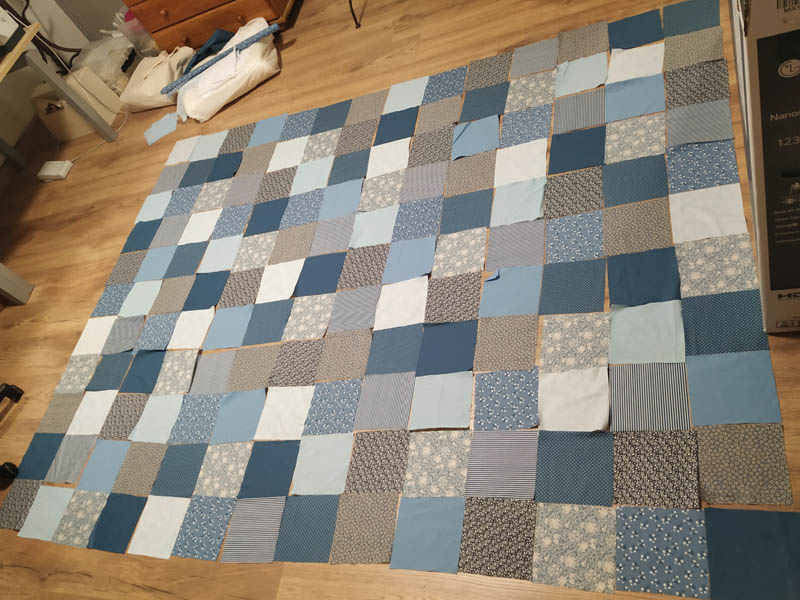
I chose wool for the interlining. Nice and warm!
Topstitching a patchwork quilt with interlining and a backing is actually quite a challenge – especially getting the stuff between your machine arm!
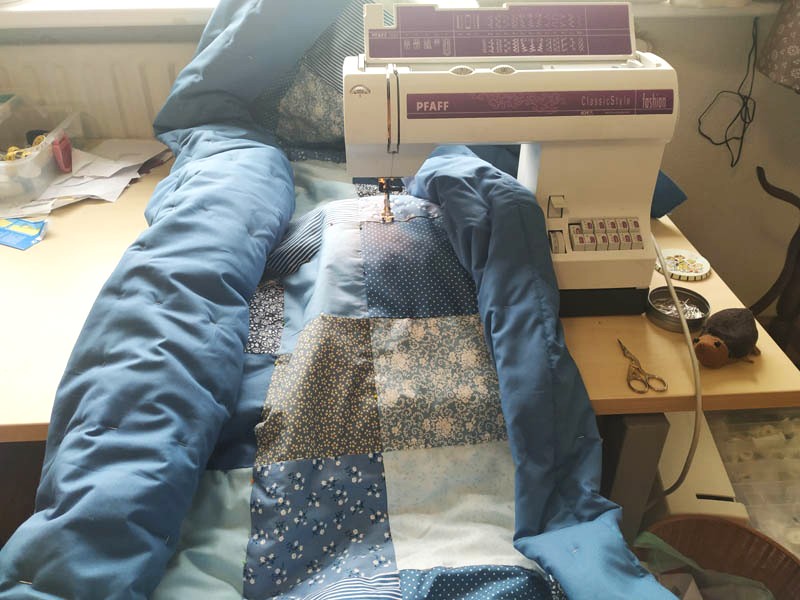
I made the backing from a large piece of dark blue cotton, which I also used for a few patches on the front and for the borders. One small thing to keep in mind is that fabric is usually no wider than 150 meters. You can get quilt interlinings in larger sizes, but for the fabric backing I had to stitch two pieces together, so you can see a seam running between the topstitches.
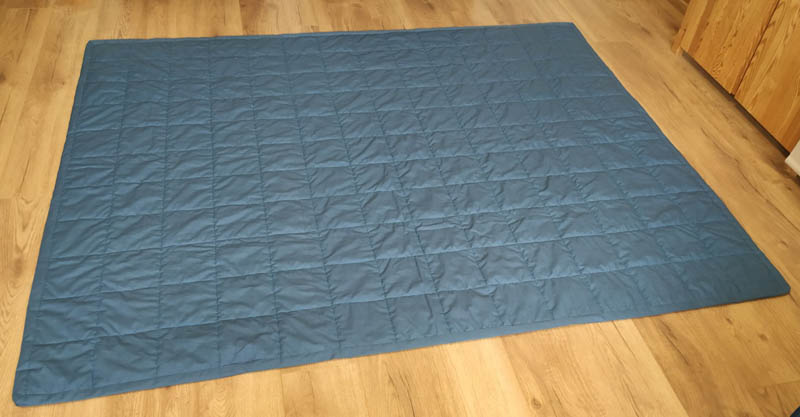
The front:

And here it is lying nice and snug on the bed. Bring on the cold!

Time spent: not tracked
Costs: €141,41 (€107,31 for fabric, interlining and thread, and a whopping €34,10 in shipping costs. 😱)
Normally, I would never have spent that much on shipping, but hey – unusual times require unusual decisions. You have to keep yourself happy during a lockdown, and this project was really fun to make – and I am very happy with the end result!