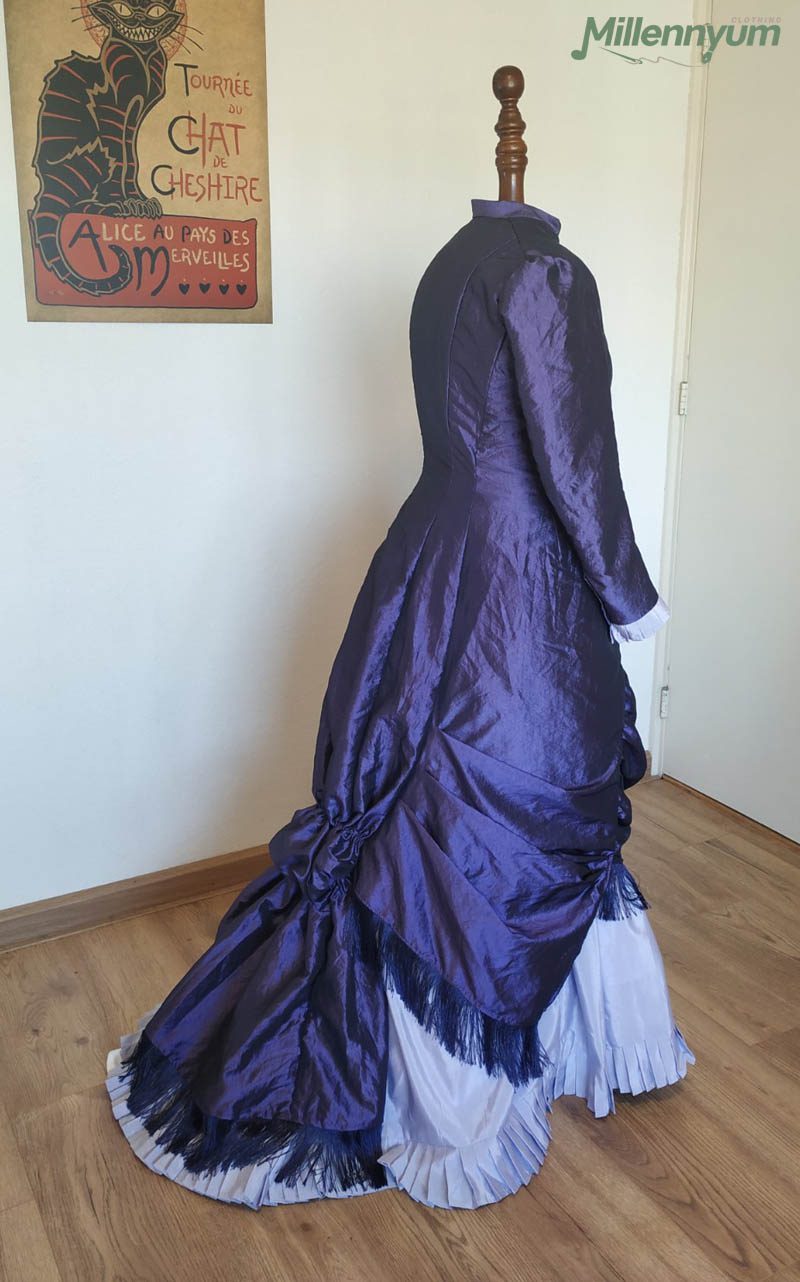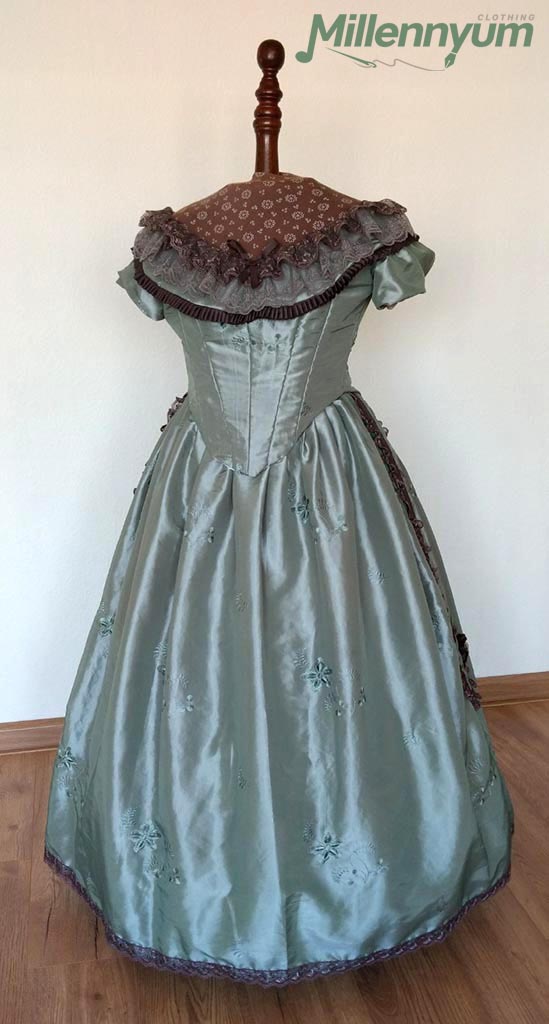
For a LARP event in a Victorian setting (1876) I needed two outfits: a day dress and an evening dress. I already made the day dress, a ‘polonaise’, some time before. I figured I would save time by not sewing a completely new outfit for the evening, but to only make an overskirt and bodice that would go with the underskirt and petticoat of the polonaise. After all, in Victorian times it was quite common to have a skirt that could be worn with both a day bodice and an evening bodice.
It took some time to find an overskirt that I could combine with the polonaise, as the latter has a ‘natural form’ shape, while most overskirt patterns are meant to be worn over a bustle (a shape which I am not fond of). Eventually I found the Truly Victorian pattern TV367 (1887 Cascade Overskirt), which I thought would work with the natural form petticoat and underskirt. For the bodice I re-used my TV442 bodice pattern, which I used for my 1860s ballgown, as those types of bodices were worn in later times as well.
Initially I wanted the evening dress to be in a different color than the polonaise dress, but it was hard to find suitable fabric that would also go with the light purple underskirt. So I ended up getting another dark purple tafeta silk.
I think the end result is really pretty!
(As my mannequin cannot wear a corset, I cannot properly dress it, and as I cannot close the bodice on my own, I am secretly holding it in the photos. When properly dressed, the bodice fits a little better around my waist. 😉)
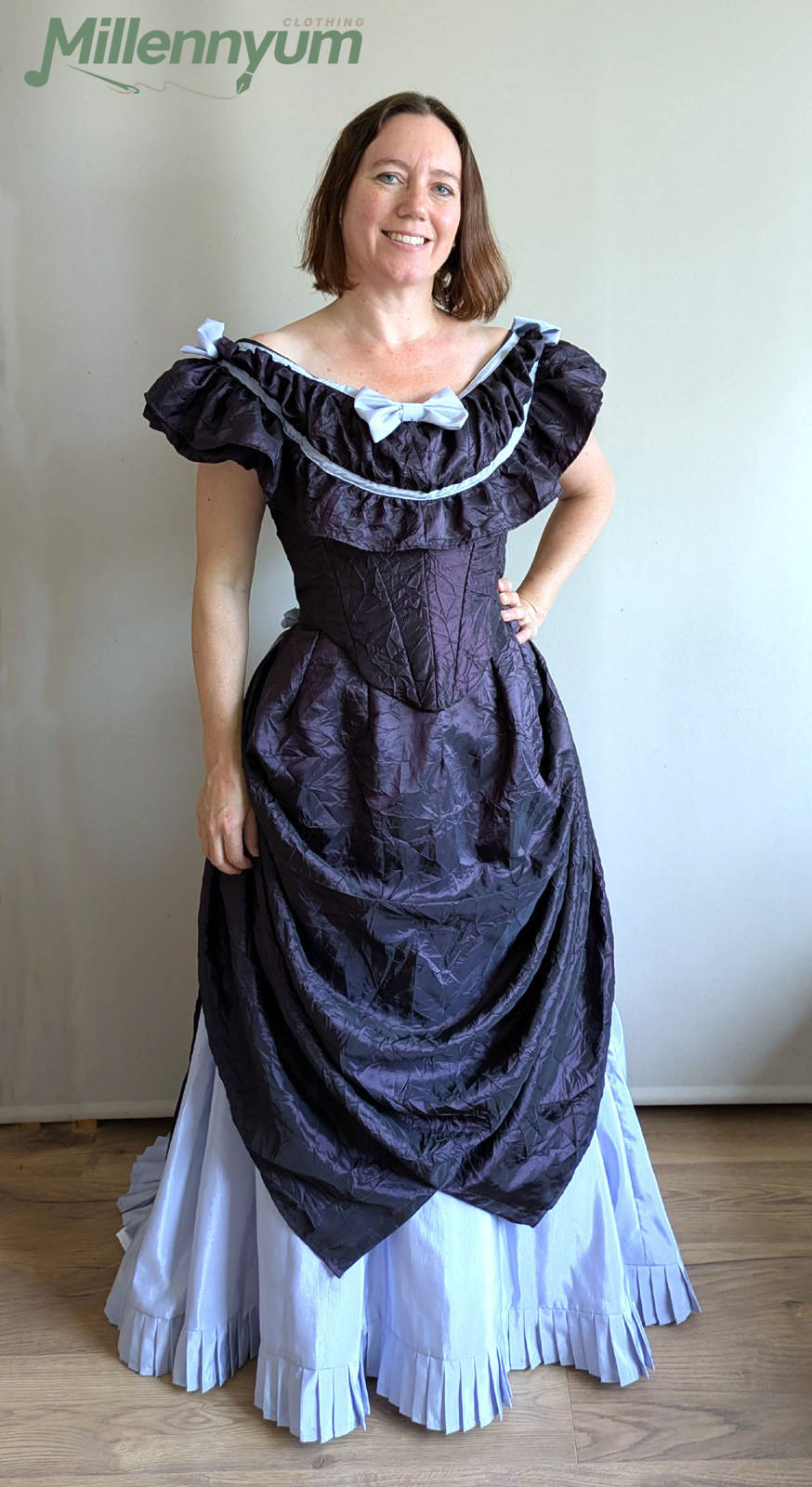
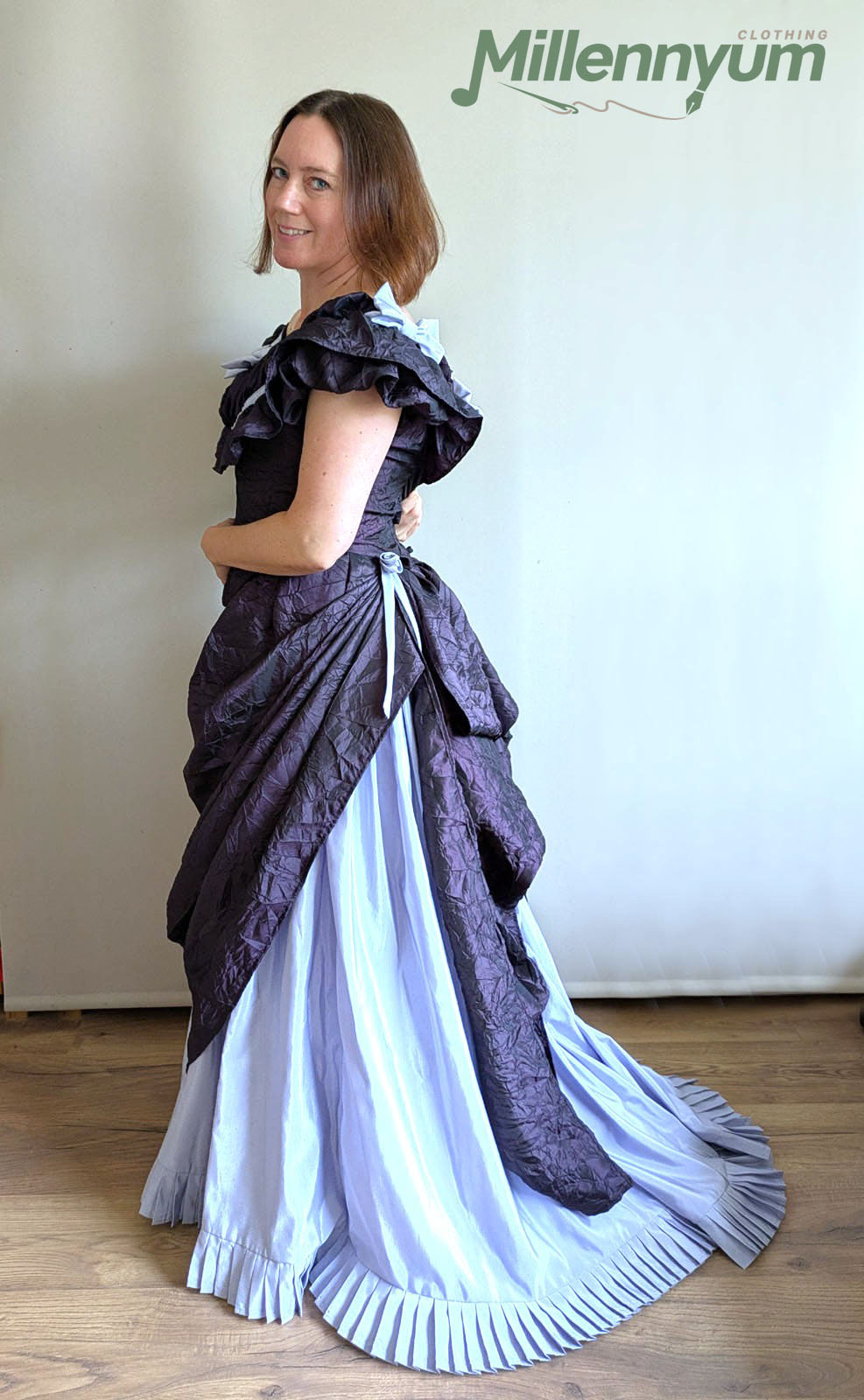
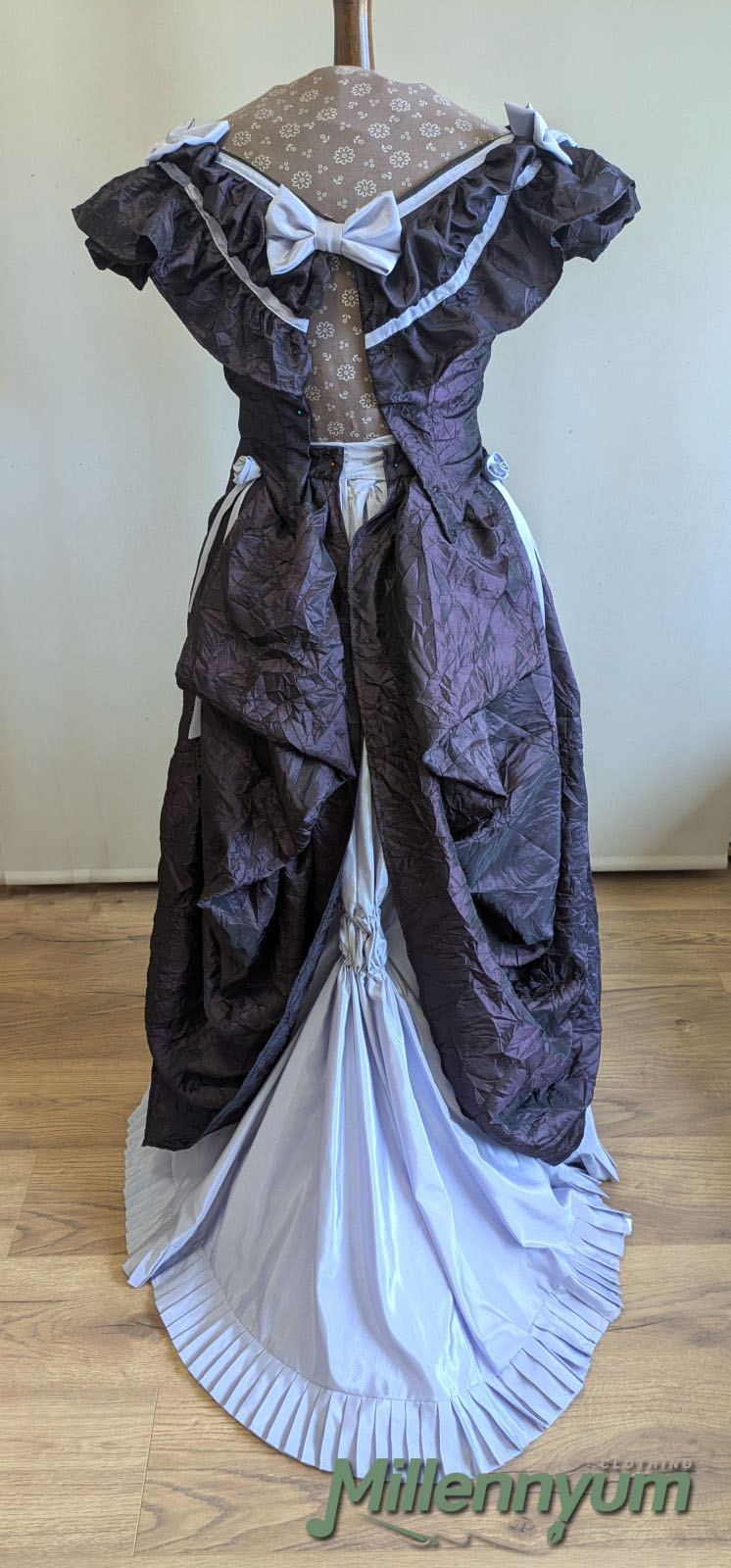
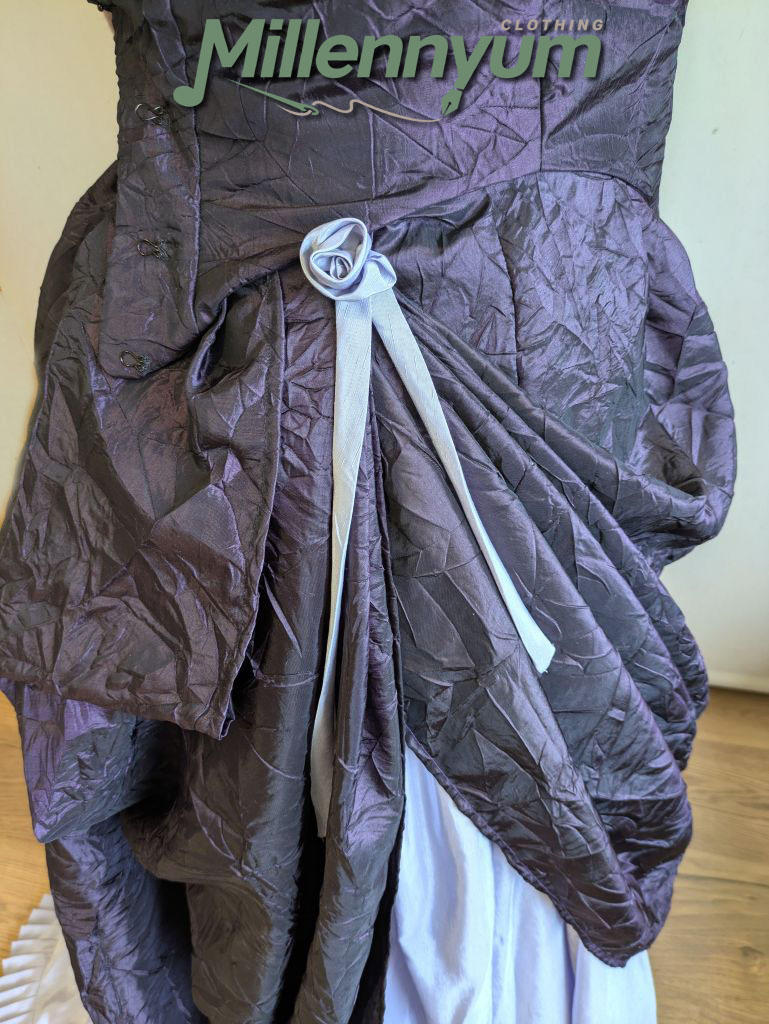
Time spent: 41,5 hours
Costs: about €37,25 (For 6,5 metres of tafeta silk and the overskirt pattern. The light purple details are made from scraps of the underskirt fabric, and I still had boning, hooks & eyelets, thread, and lining lying in stock.)
Related Posts