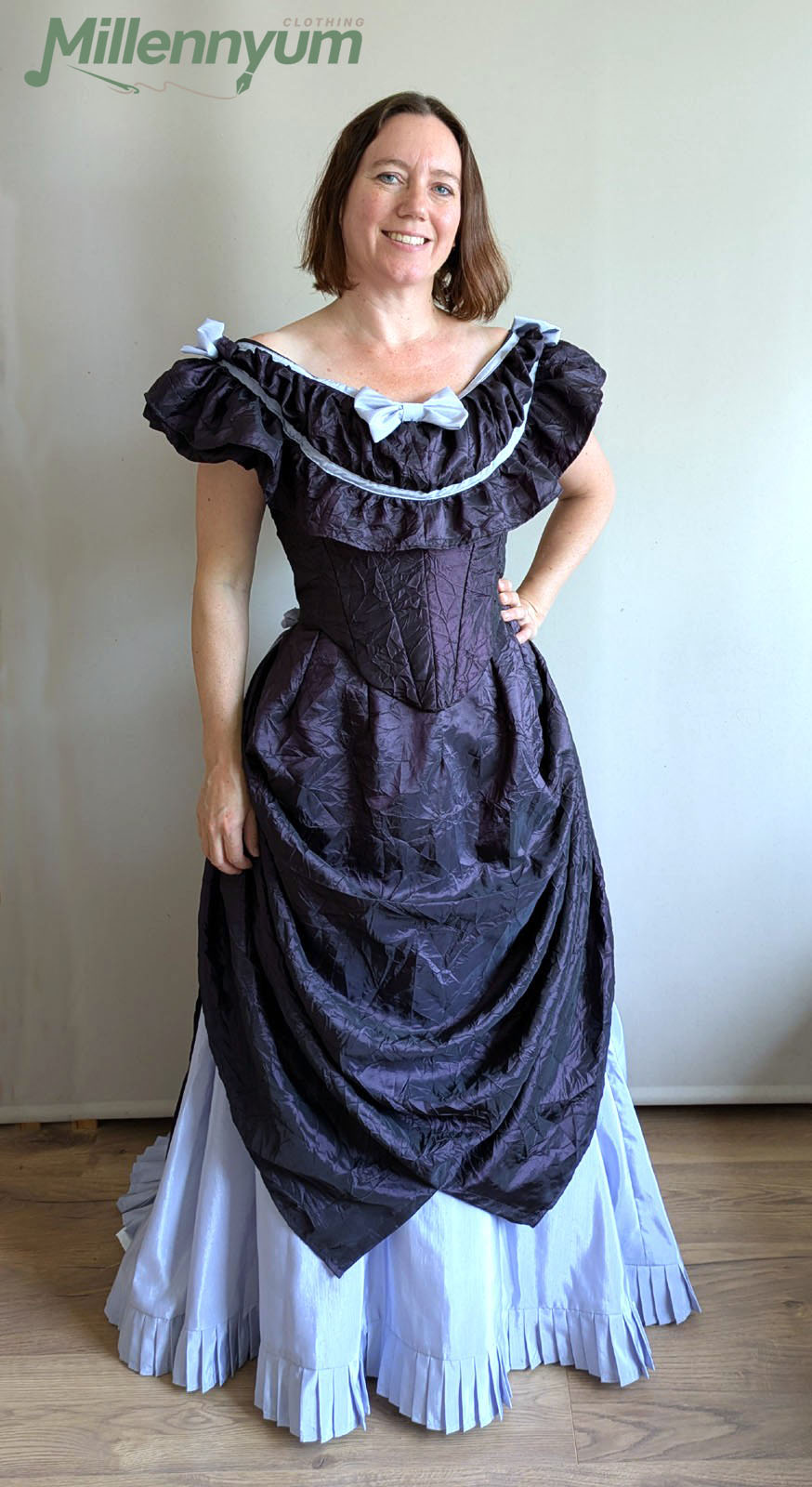
I signed up for a LARP event that takes place in 1876. The guidelines stated that we were allowed to wear outfits from the period 1868 to 1901. In other words: no hoop skirts! The location apparently has a few narrow corridors, and we won’t be able to get through them in hoop dresses… That means I can’t reuse my previously made outfits.
So what then? I have made two ‘bustle dresses’ (the ones with a stuffed bun on your behind) in the past, but they aren’t chic enough to wear to this event, and also, I don’t actually like bustles that much…
Now, from 1877 to 1882, there was the so-called ‘natural form era’, in which bustles were not worn (if you were fashionable, of course). The name is somewhat misleading, because the body shape is still far from natural – you still wear a corset and, with the help of a petticoat, you still create bulk at the back, only that bulk is located more at knee level, and you no longer have steel constructions underneath your clothing. Around that period, the so-called ‘polonaise’ became popular again: a long, coat-like dress worn over a petticoat, instead of a short bodice worn over a regular skirt. I think that is a beautiful style, so I decided that my costume was going to be a ‘natural form polonaise dress.’
As the base pattern for the polonaise, I used Truly Victorian pattern TV430. I based the underskirt on a skirt pattern I still had, and I added the bulk at the back a bit by guesswork.
I significantly modified the basic pattern for the polonaise. I moved the closure from the back to the front, changed the shape of the front panel so that the bodice and skirt appear to be separate pieces there, and added cuffs. It was a good thing I made a test model from the lining fabric first, because let’s just say it didn’t go right the first time…
I had hoped that by wearing an underskirt with bulk at the back, it wouldn’t be necessary to wear a petticoat as well. But it turns out they really didn’t use to wear those things for nothing. To achieve that beautiful flowing shape, I also had to sew and wear a petticoat. For this garment I chose the TV125 pattern.
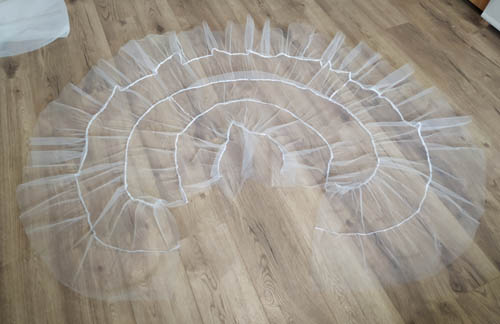
Sewing the petticoat was a lot more work than I had anticipated. Partly because I had chosen a rather elaborate design: the train is optional and is tied to the base petticoat, making it easy to leave off if you want to wear a dress without a train. And it contains an incredible amount of fabric (about 8,5 meters of plain fabric and 4,5 meters of tulle). In total, I gathered about 24 meters of fabric strips to create the ruffles. On the outside, you only see the white cotton, but the back of the base petticoat consists of two layers of fabric layered on top of each other, with a whole bunch of tulle ruffles sandwiched between them:
And yes, I could have just serged the fabric ruffles, but I neatly hemmed the entire 12 meters. Sigh.
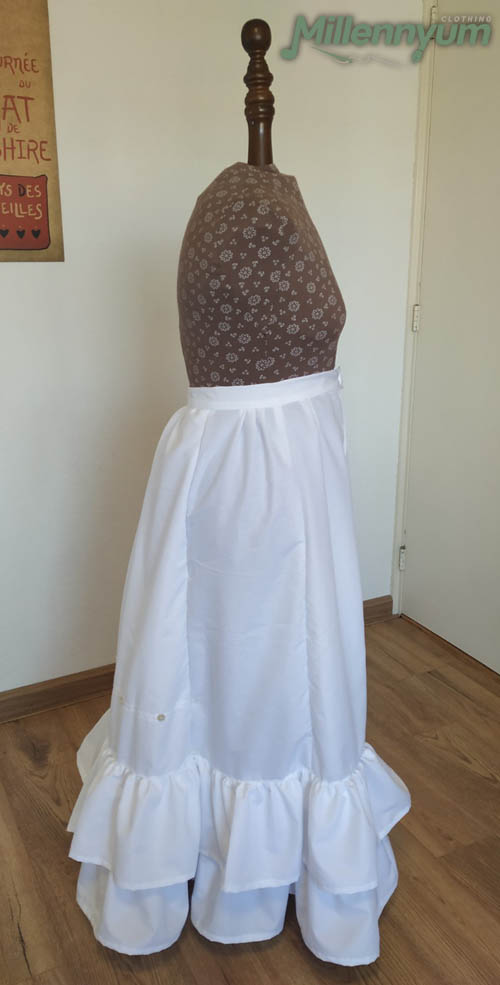
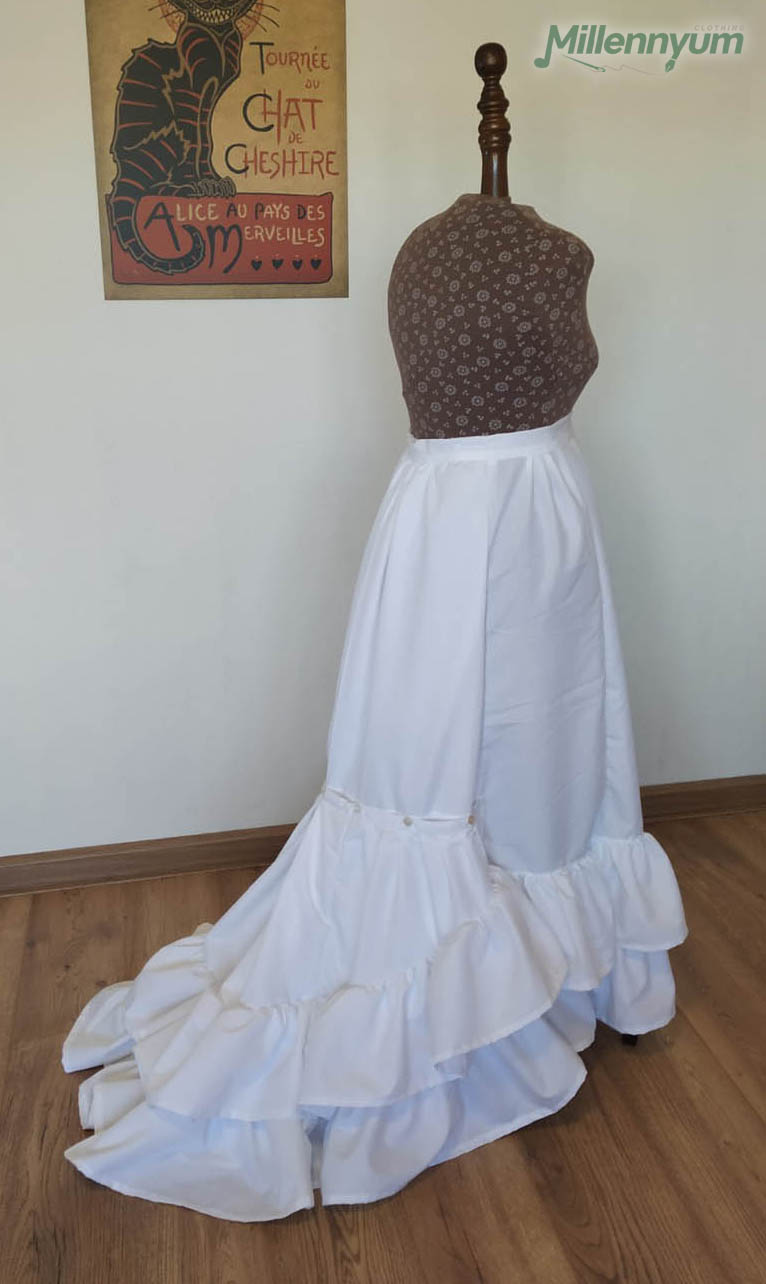
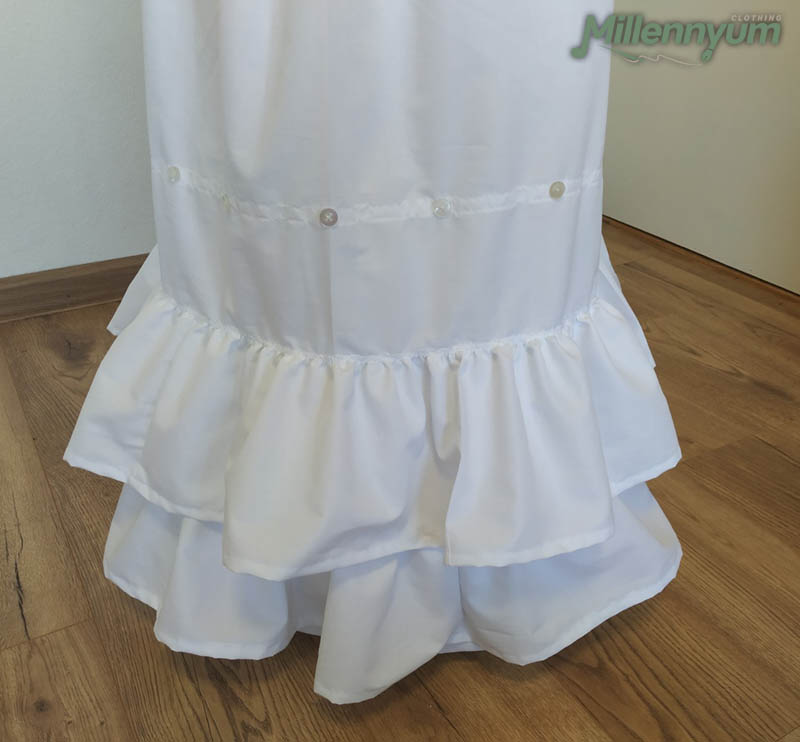
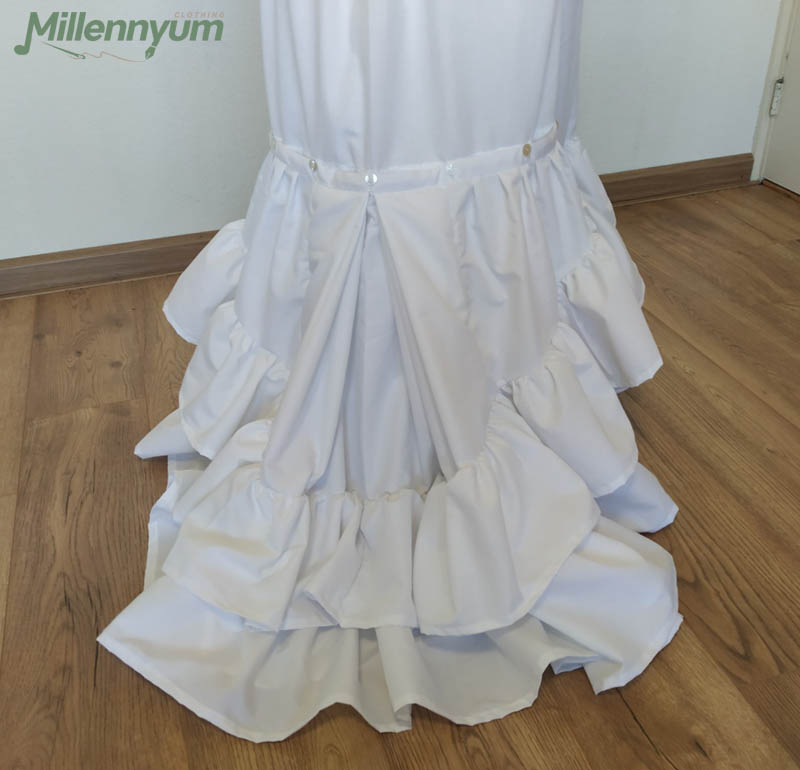
The circumference of the petticoat seems enormous, but because of that inner layer at the back, you are left with very limited room to walk. That was a bit of an issue with this style of clothing.
This is the underskirt I made to wear over the petticoat:
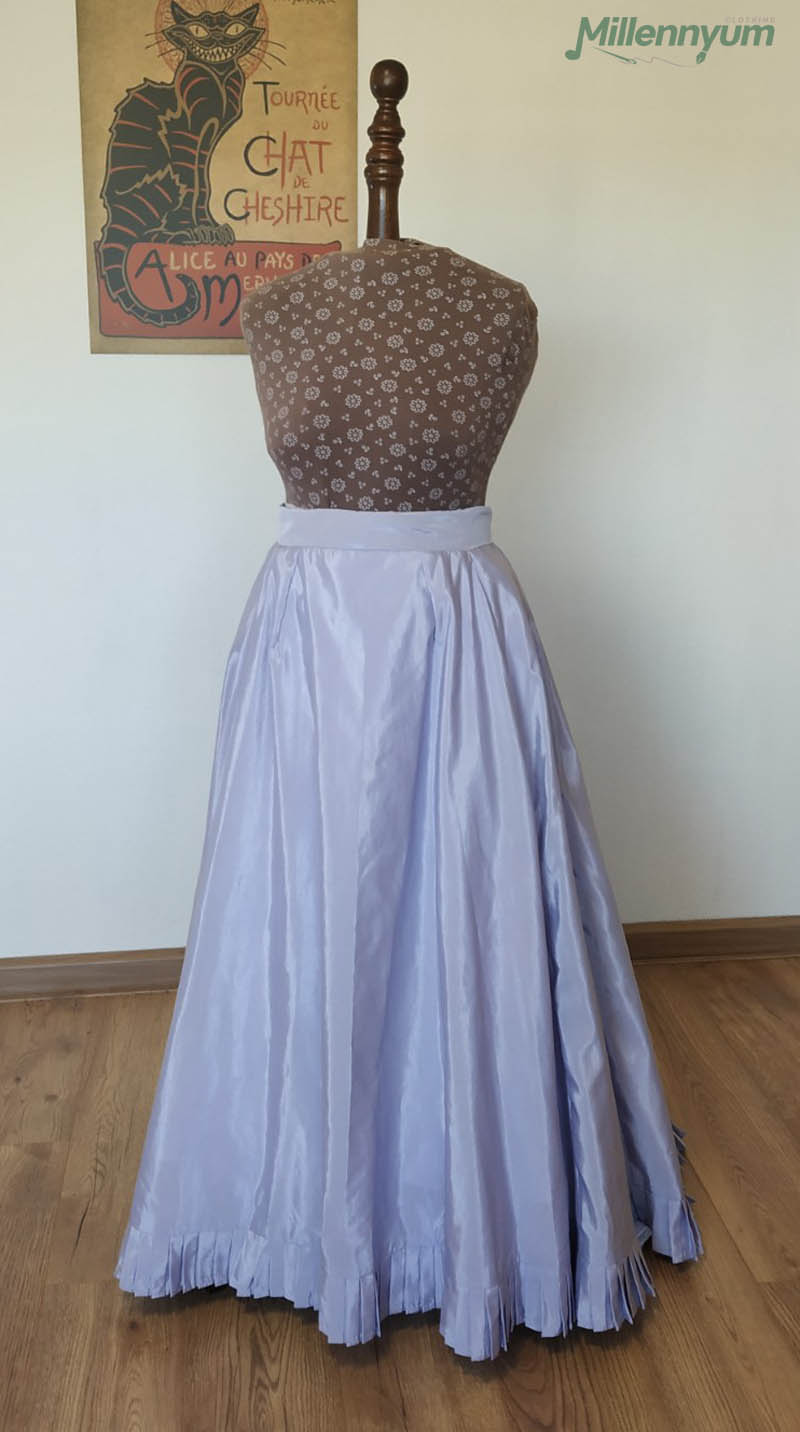
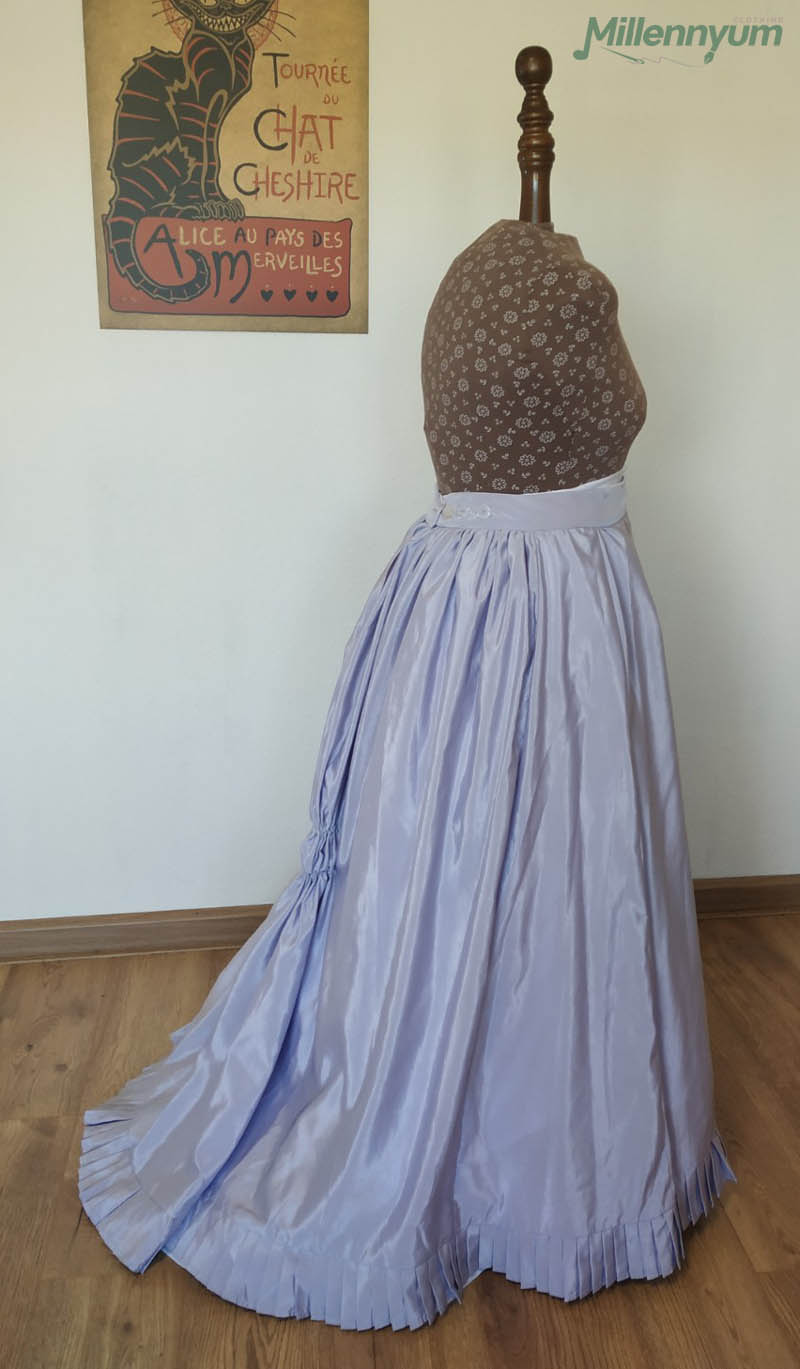
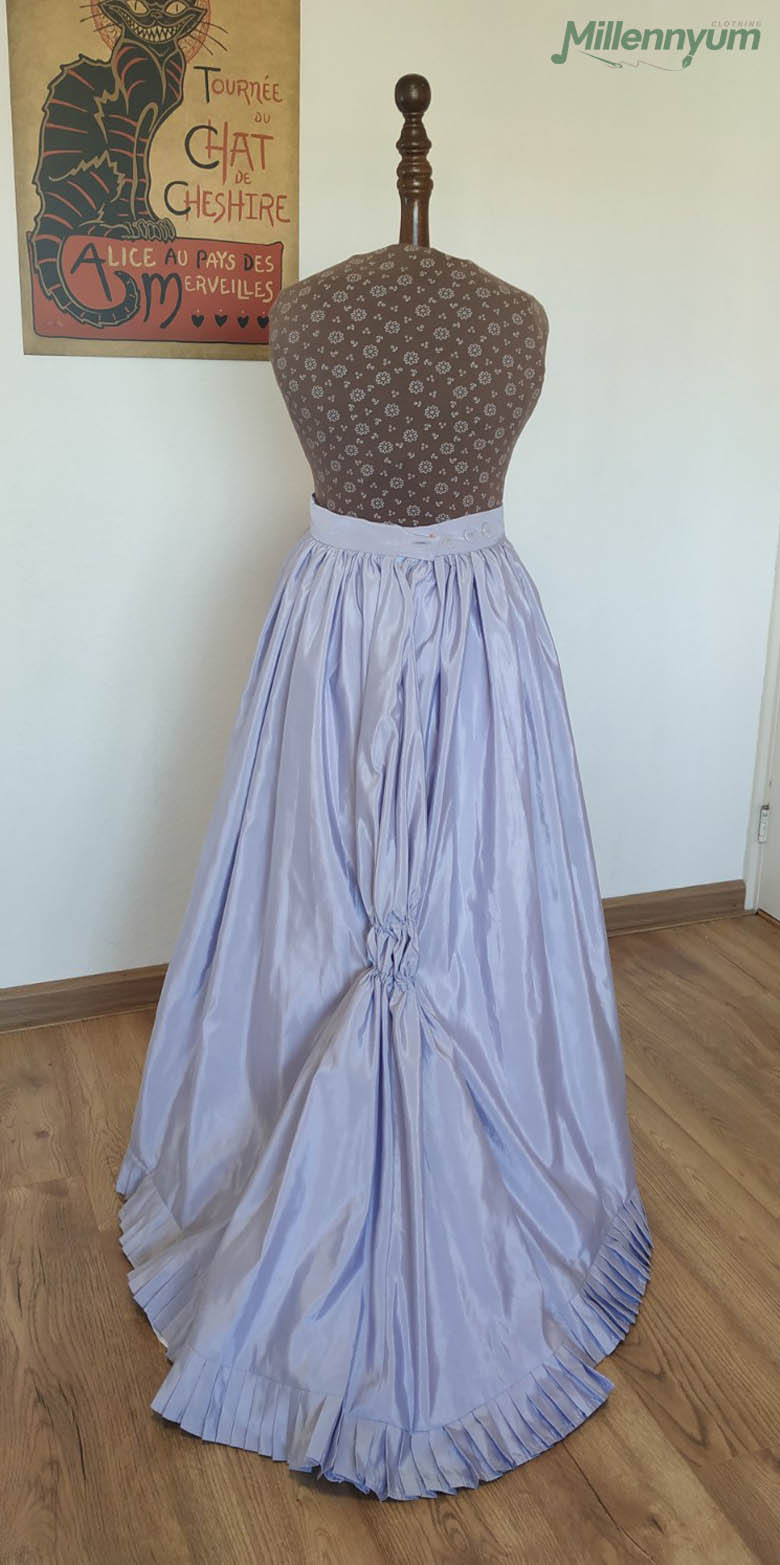
No gathered ruffles on this one, but lots and lots of pleats at the hem!!
And over the petticoat comes the actual polonaise dress:
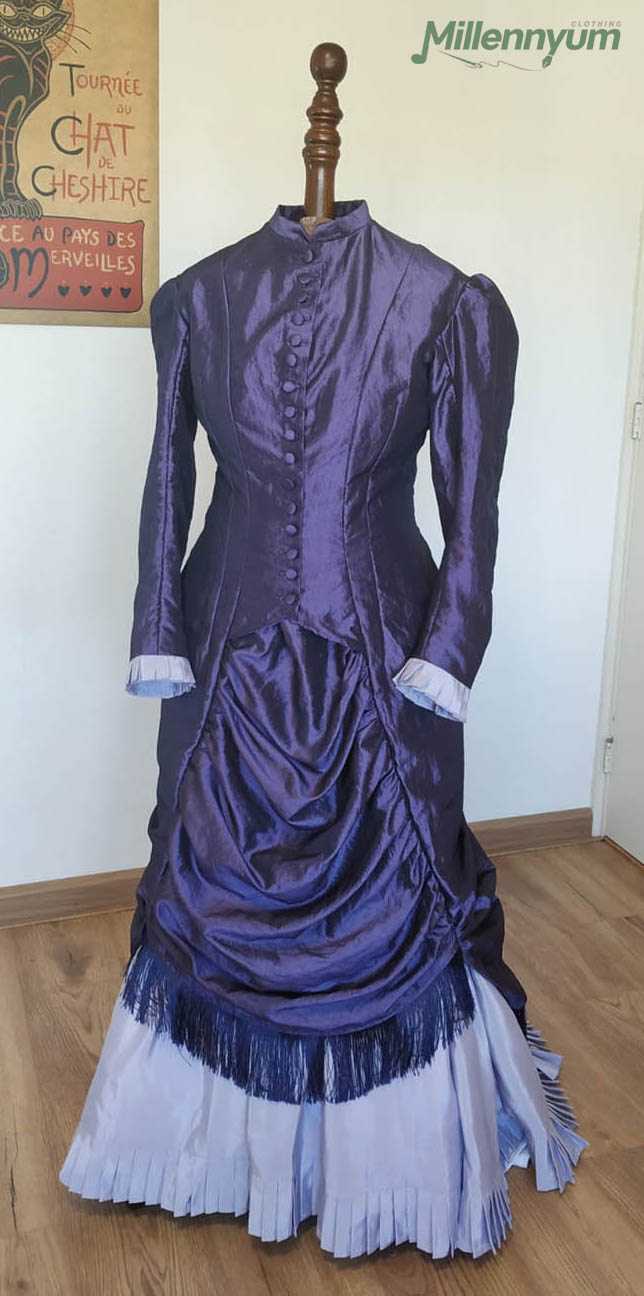
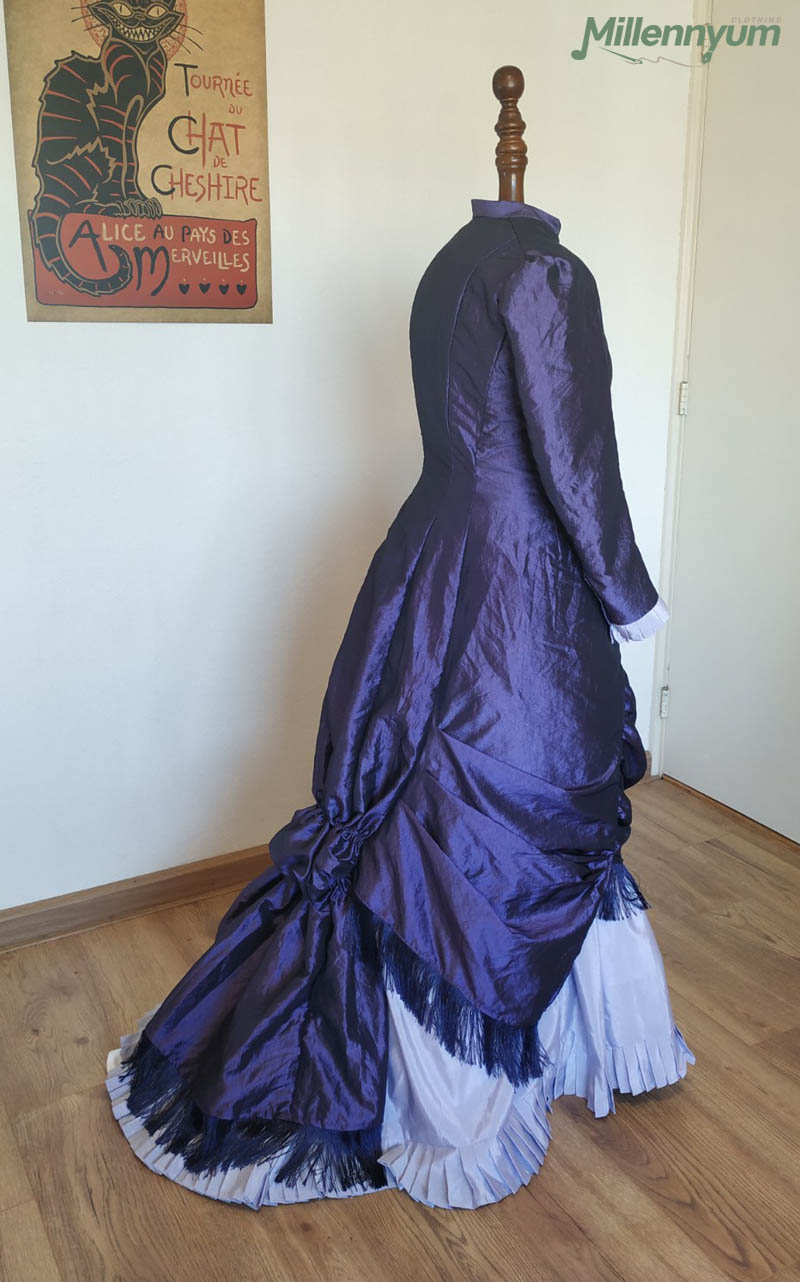
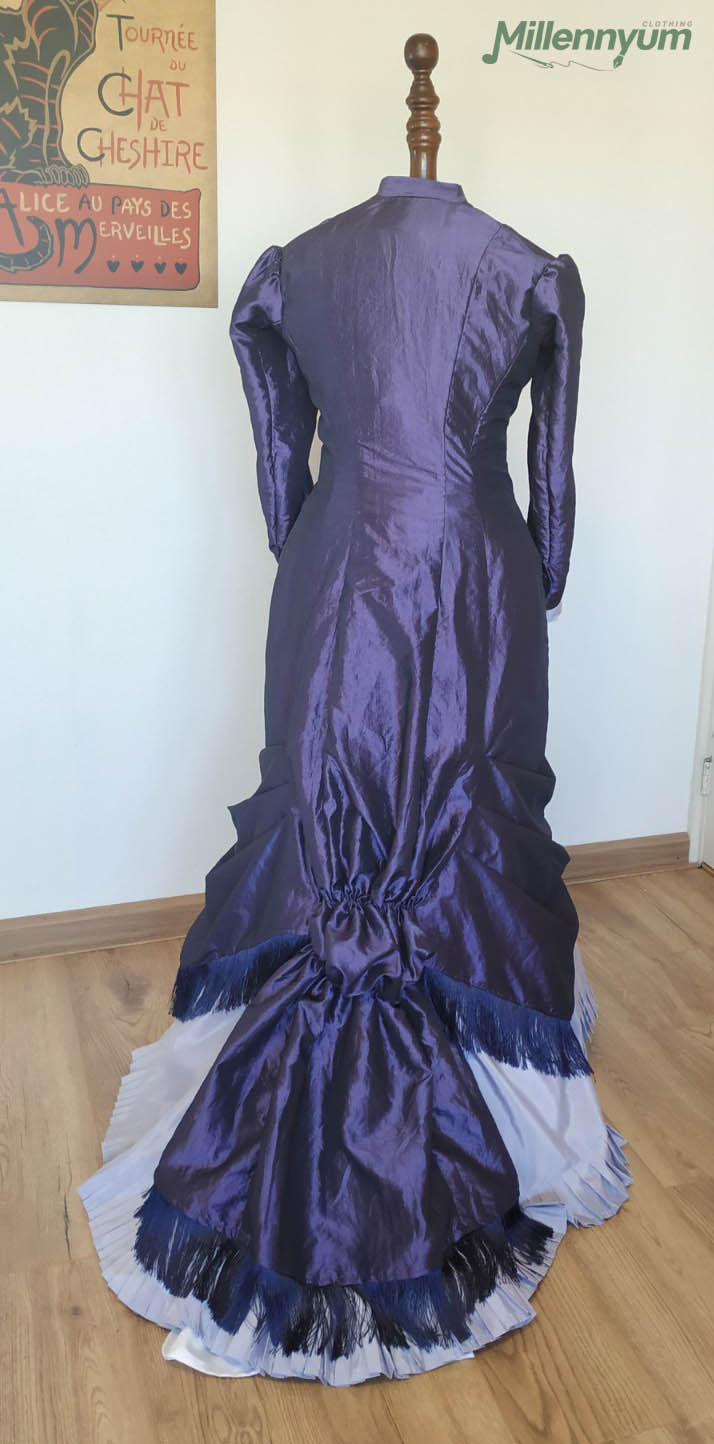
Time spent: 69 hours (skirt and dress) / 26 hours (petticoat)
Costs: €126,91 (skirt and dress) / €87,68 (petticoat; enormous amount of fabric and tulle, plus pattern)
Related Posts