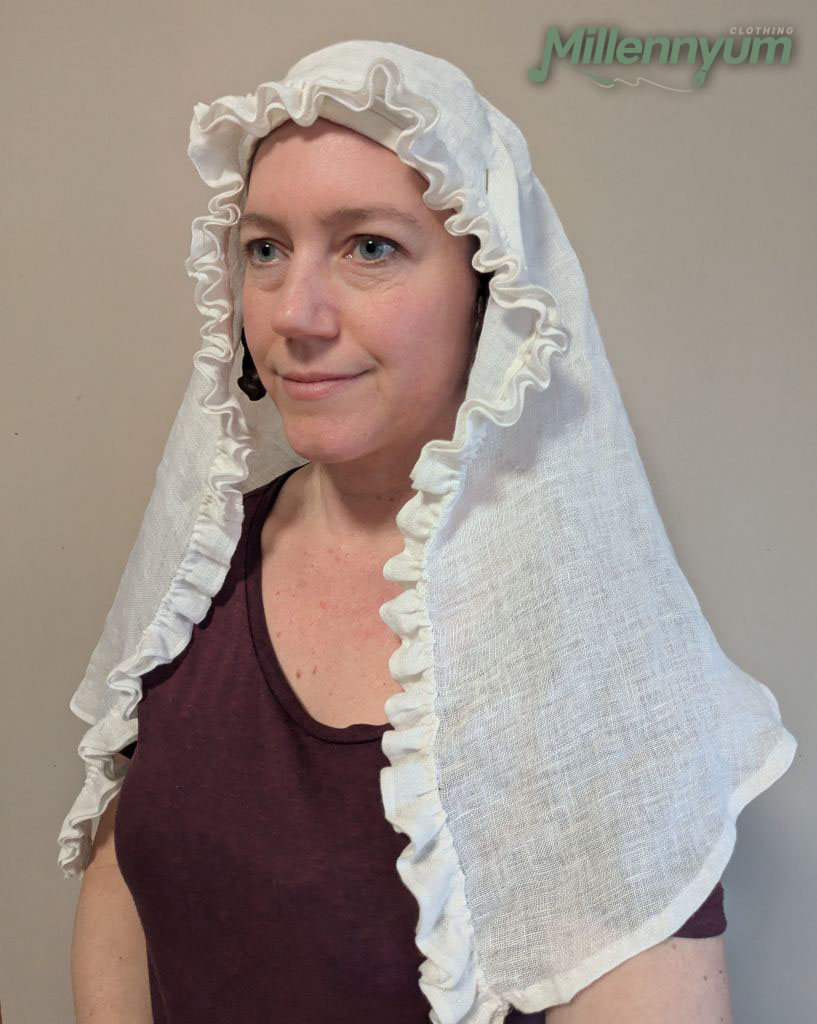
I made another medieval dress! This one is meant for performing with my band. As a musician, I wanted a less boring outfit than the dress I wore as a crafter in my re-enactment group, so I made one with two colors (called ‘mi-parti’, meaning ‘parted in the middle’).
It is a cotehardie (a garment popular in the 14th century), that is sometimes depicted on manuscript illustrations with a button closure and/or ‘streamers’ or ‘tippets’: strips of fabric that run down from the sleeves. Rather impractical, but I thought it would give an extra fancy effect during performances.
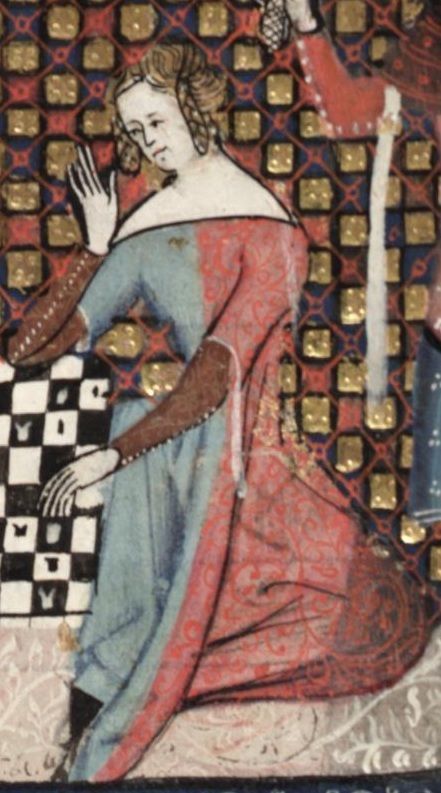
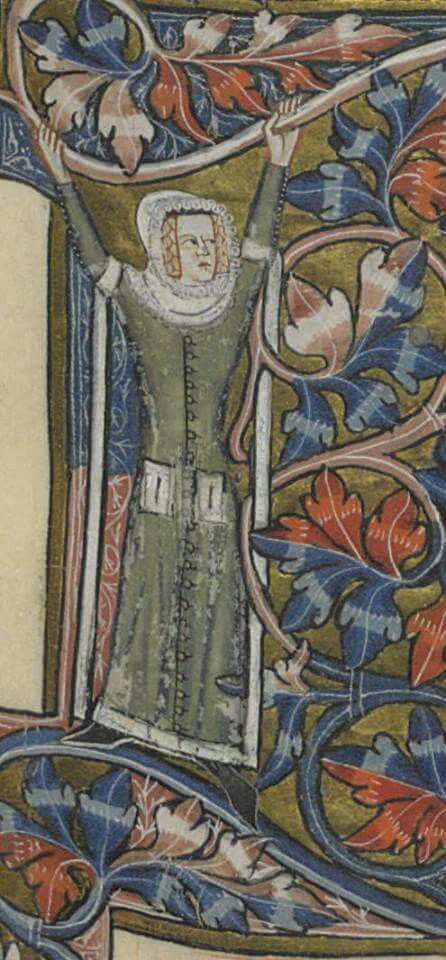
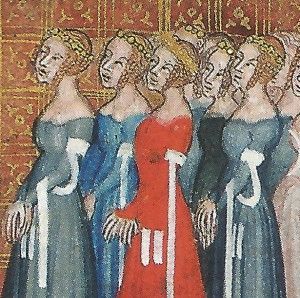

It’s not entirely clear if these tippets were indeed made of linen, as I did. There were fur tippets for sure, for the rich folk (which as a musician, I am most certainly not). But there are also manuscript images in which plain white tippets can be seen, so it may be something else than fur. Although you were supposed to dress according to your class, people have always been people, trying to immitate the richer folk, so I can imagine the less rich people made tippets from other materials.
So here’s the result!
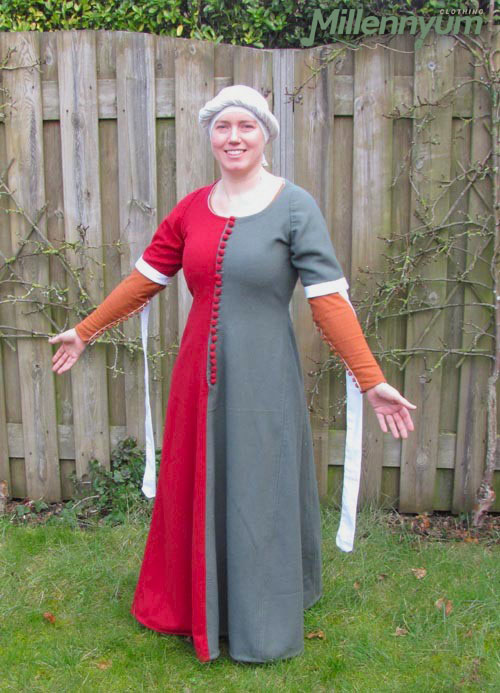
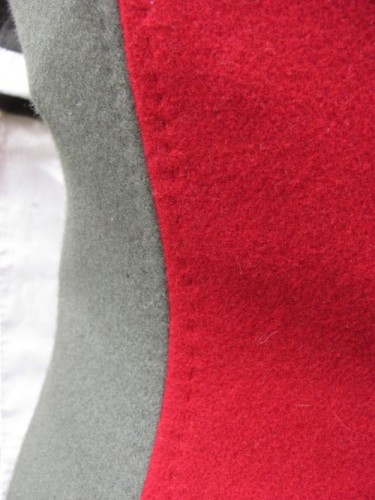
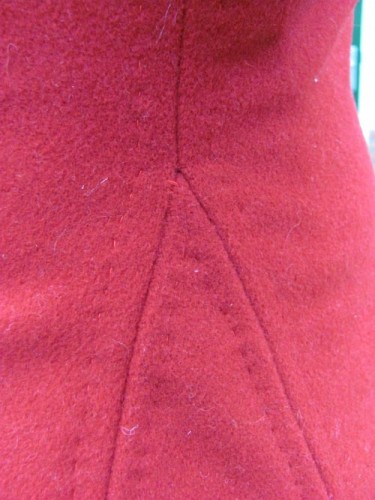
Once more, I did almost everything by hand: stitching the hems, stitching open the seams, attaching the facings, making the buttons, finishing the button holes, etc.
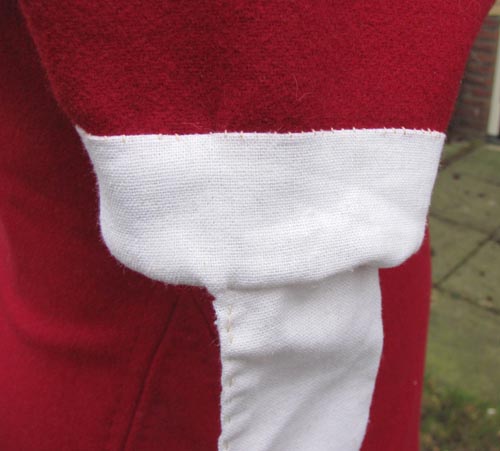
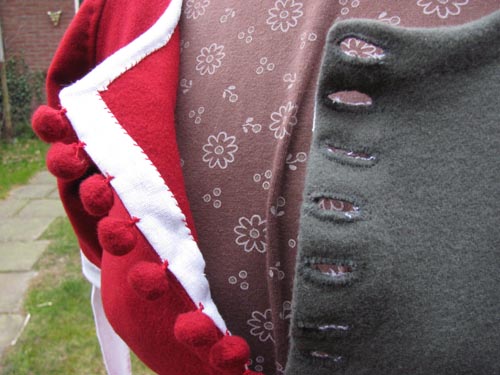
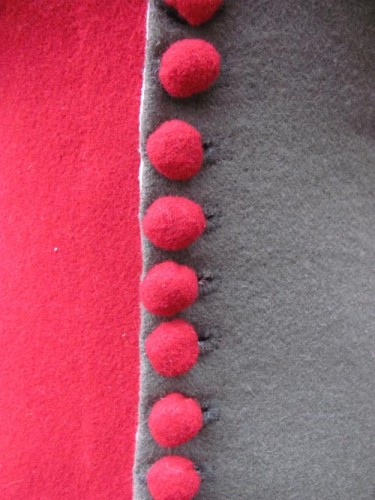
There’s of course always the ‘in hindsight’ things – next time I would make the neckline wider and less deep. I cannot fix it in this dress, because I cannot add fabric that has been cut away, and as the shoulder seams are positioned relatively near the neck, compared to our modern outfits, I cannot make it much wider than this either. (I thought I read somewhere that medieval shoulder seams were supposed to be relatively close to the neck, but perhaps that was not true. Or it depended on the fashion – for wide necklines like those in the manuscripts that certainly couldn’t have been the case!)
Time spent: 29 hours (A new record! I’m getting faster! Admittedly, this does not include drafting the pattern, as I already had one I could re-use.)
Costs: €31 (€16 for 1 meter of red wool €15 for 1 meter of green wool. The white linen was a left-over from another project and I still had sewing thread. Although I am now wondering whether I miscalculated… on hindsight, it is rather a feat to make such a long dress out of only 2 meters of fabric…)
Related Posts