
Being a control freak, I dictated to my friends what I wanted for my bachelorette party: a Mad Tea Party! One of the advantages of knowing what we were going to do, was that I was able to sew myself an appropriate outfit for it. I have no idea if other guests will show up in costume, but I thought I at least should be dressed as Alice. Also: an Alice in Wonderland fan with sewing skills who doesn’t own an Alice costume? Impossible! 😄
So I bought a pattern (McCall’s M4948) and set to work.
Because I’m not only a control freak but also a perfectionist, I wanted my Alice dress to resemble the one in the book illustrations as much as possible. That brought some challenges. Because first, there are multiple versions of the illustrations. In Alice’s Adventures in Wonderland, she appears to be wearing a different outfit than she does in the second book, Through the Looking-Glass and what Alice found there. For example, in the continuation there are ruffles on her apron, is she wearing striped stockings, and a headband. And there are some other changes as well.
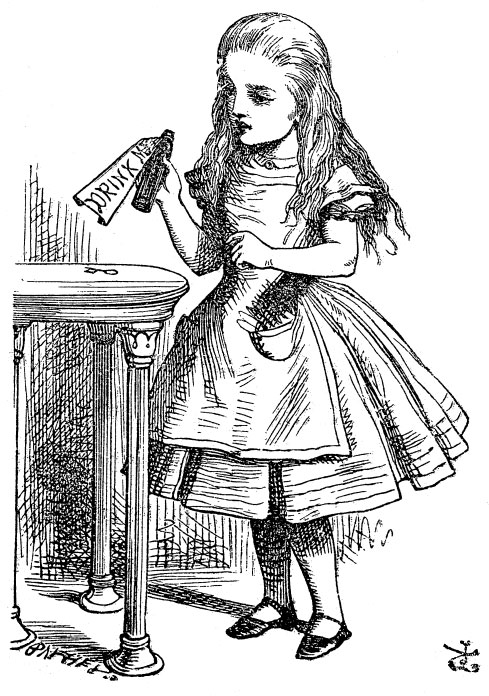
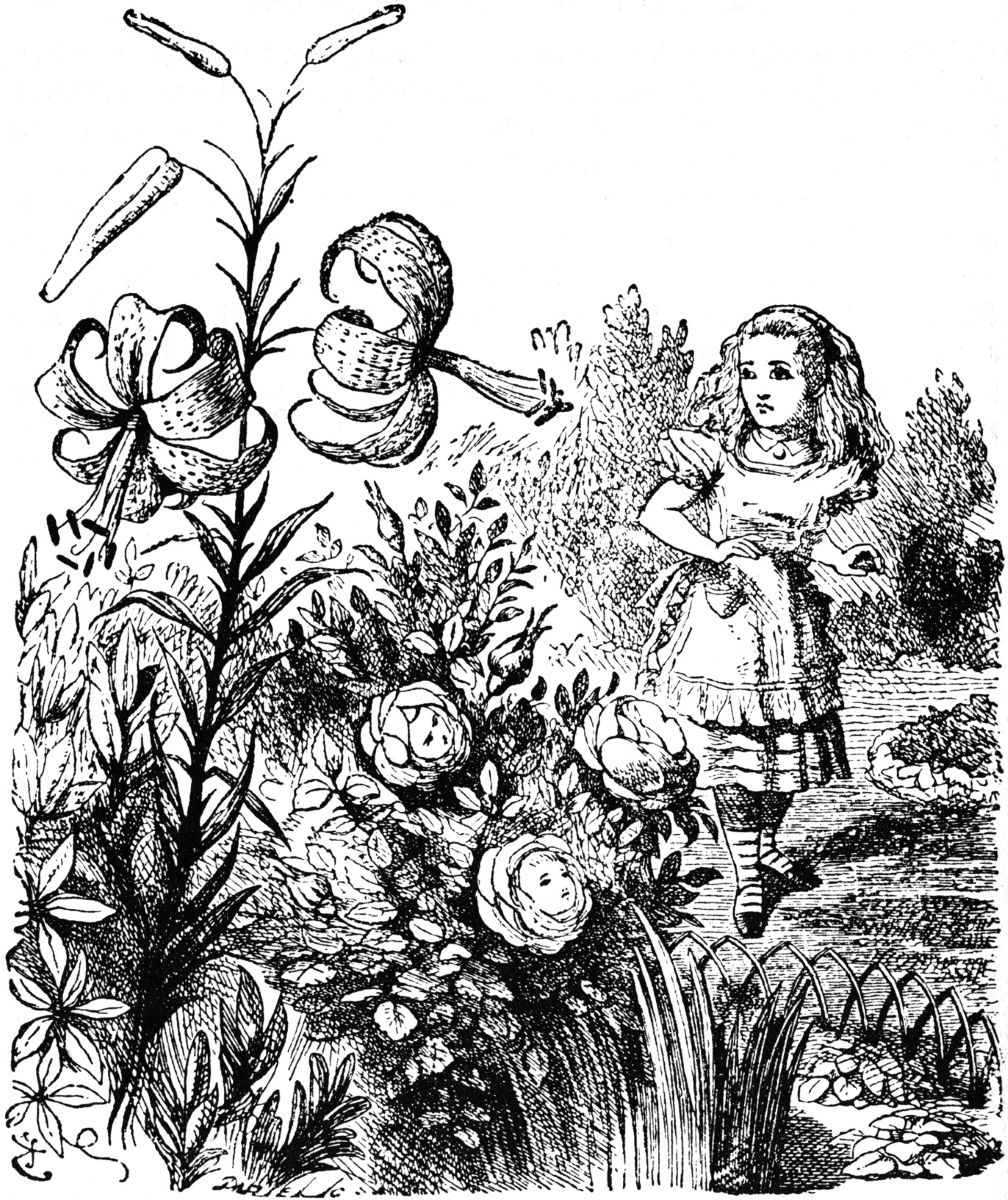
In Nursery Alice (an abridged version of Alice’s Adventures in Wonderland that has coloured illustrations) she is wearing yet another version of the dress! Some kind of sash with bow is tied around her waist, the headband has become a bow, and there are a lot of straight pleats in her dress!
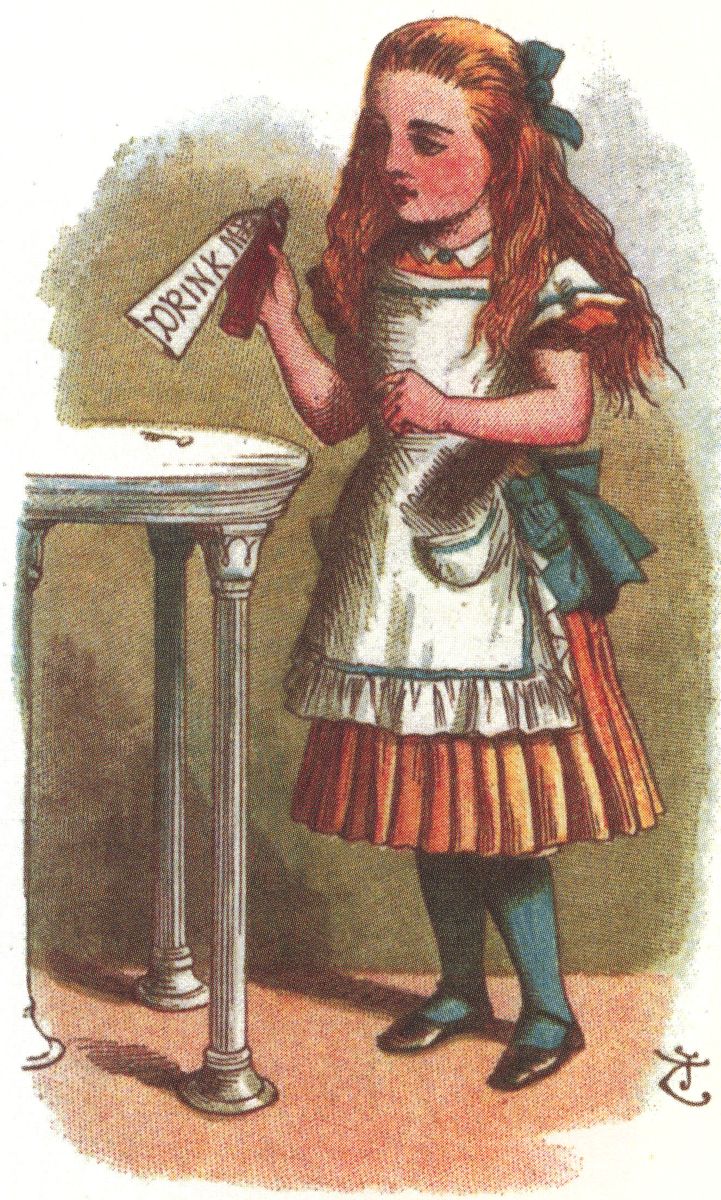
Then there’s the colour of the dress. Thanks to Disney, nowadays we always imagine it to be blue. However, the original illustrations were black and white, and the first time they were coloured for an edition of the story (which was for Nursery Alice), the dress was yellow. But those illustrations are not the first time Alice’s dress was colored: on merchandise products it initially appeared as a red dress. So, what to do?
I decided to go for the colour first seen in book illustrations: yellow/orangish. However, I wasn’t able to find a suitable fabric in that colour, so it became a rather bright yellow instead. In hindsight, I should therefore perhaps have switched to blue, but well, done is done.
I also decided to make the ‘Looking-Glass’ version, because I like that dress a little better than the ‘Wonderland’ version.
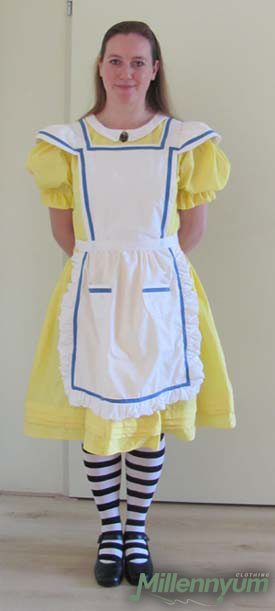
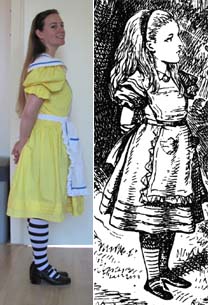
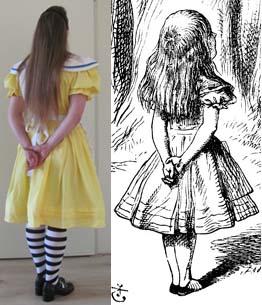
It has become a bit over-the-top cute with these huge puff sleeves… Next time, I would adapt the pattern to make them a bit smaller. And dear me, what a lot of pleating did I have to do! There are pleats in the sleeves of the dress, in the sleeves of the apron, around the waist seam of the dress, in the waist seam of the apron, and in the ruffles that are attached to the apron!
I admit: it has not become an exact copy of the dress you see in the illustrations. Apart from the colour, I realised too late that I’d made the top edge of the apron angular instead of rounded. Furthermore, upon closer inspection of the illustrations, it turns out Alice’s apron doesn’t have a back at all! That’s impossible, though – it couldn’t just be held in place by a neck strap, because then there would be nowhere to attach the little sleeves. So I guess John Tenniel wasn’t exactly aiming for realism in his illustrations. The pattern I bought took the easy way out, too: they instructed to simply sew the top of the apron into the shoulder seam, meaning there would be no back whatsoever. In the end, I sewed on some straight straps. It doesn’t match the illustration, but an apron just can’t exist if it’s essentially floating in mid-air…
I also had doubts about the lines you can see at the bottom of Alice’s skirt. Initially I thought they were decorative stitchings or trims, because many Victorian dresses were adorned with black trims. But if you look closely, in some illustrations you can see a section of the skirt stand out more than another section, which implies layers. My sewing teacher claimed that they’re actually tucks (pleats). Since children grow out of their clothes so quickly, people would often take up the length of a dress by sewing in a few tucks. As the child grew, they could simply let out one or more of these tucks to make the dress longer! That seemed a logical explanation, so I went for pleats.
I assume that I will gain further insights of the dress’ construction in the future, but for now this will do just fine as my bachelorette party costume!