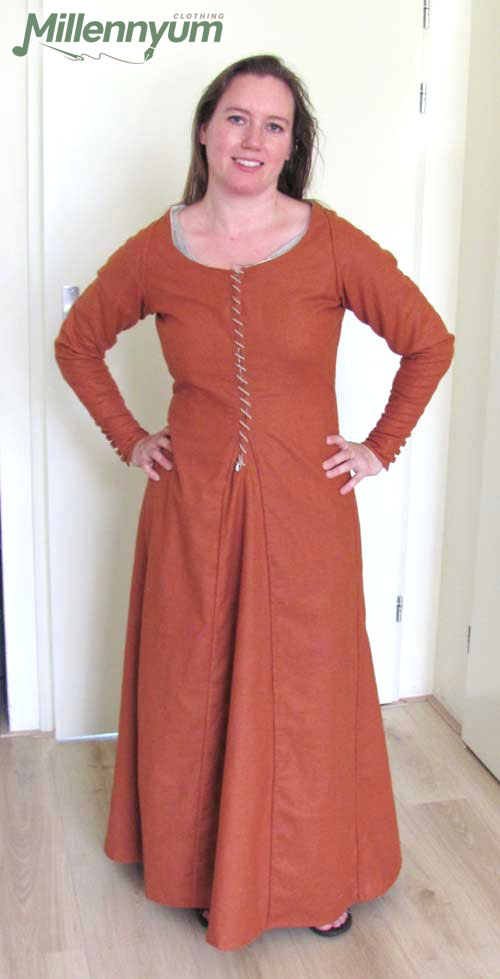
Since I made my linen kirtle, I learned a lot about medieval outfits. I was able to apply all this knowledge to my new kirtle, made of a thick wool so it will be nice and warm.
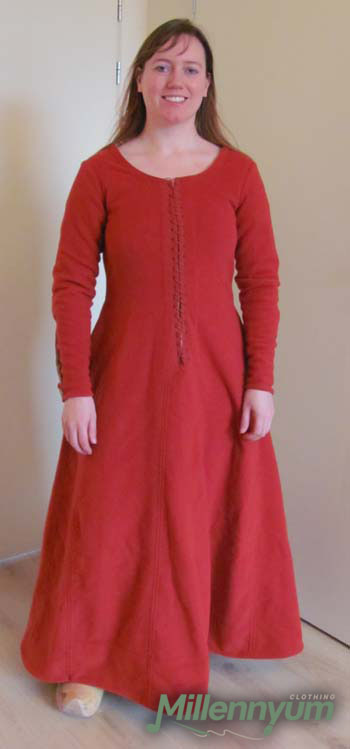
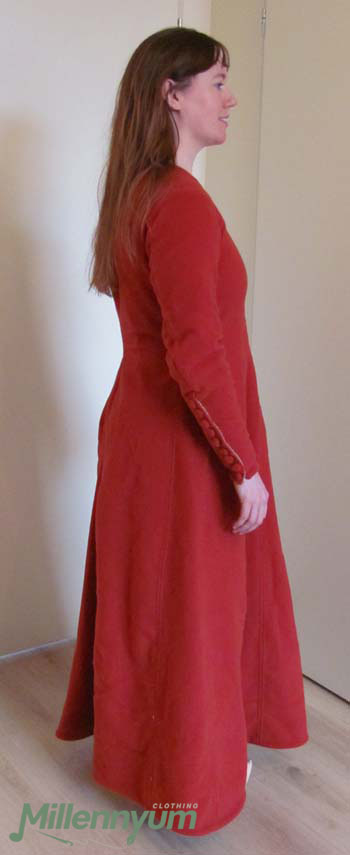
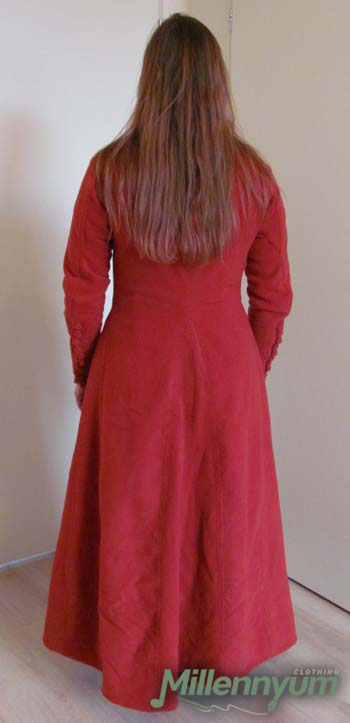
It cost me almost my entire summer holiday, because of all the manual sewing it requires. I also had to draft my own pattern, because medieval outfits fit differently than modern ones: they fit more snuggly around your body as they were made-to-measure, especially around and under the arms. I created the pattern with the help of my sewing teacher, who pinned a piece of cloth tightly around my body, that I subsequently cut open and used as the basis for the pattern. Of course I didn’t get it right the very first time; I made two mockups of old fabric before I dared cut into my nice 100% wool…
Only the invisible inner seams were sewn with a sewing machine, all visible seams were sewn by hand. I also stitched open all the inner seams by hand in a contrasting green color (which turns out to be hard to see).
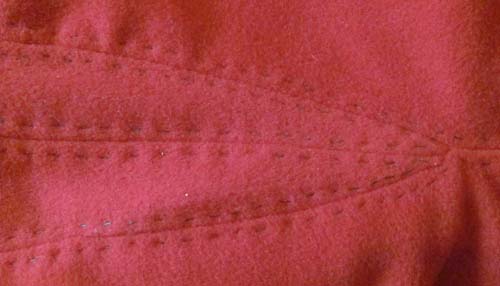
For the visible seams I used silk thread instead of cotton thread, as they did not use the latter yet in medieval times. I must admit that I hardly see the difference; the silk one is a bit more shiny, but you’ll have to look very closely to spot that.
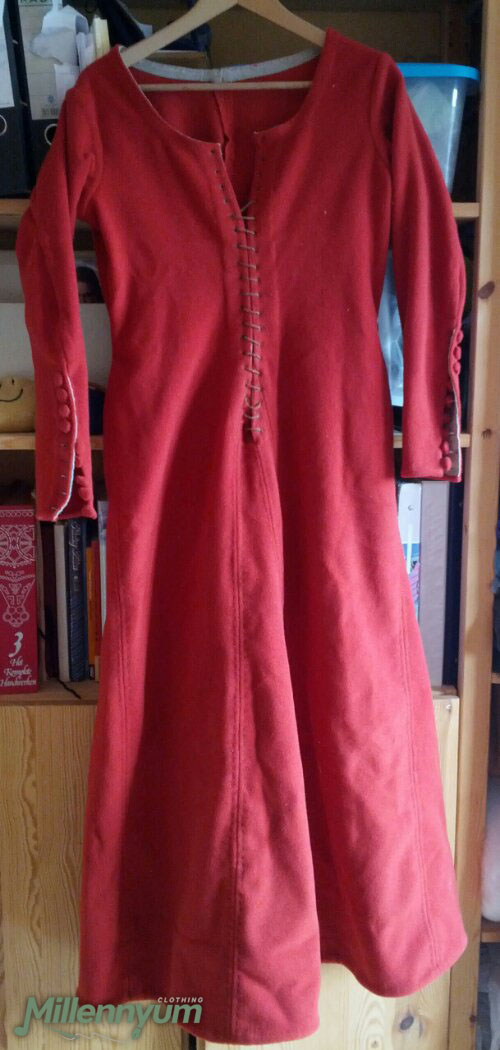
The closure at the front was made with the help of an awl: I pushed it through the fabric to create the holes and then sewed around the edges.
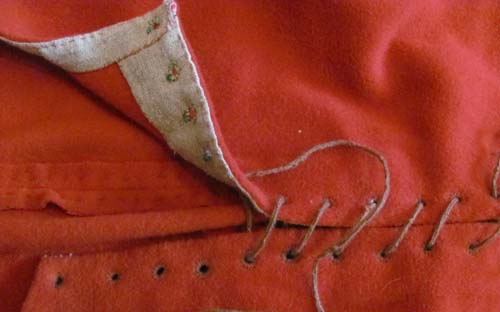
I made the cord using a lucet. I used hand dyed (not by me) linnen yarn for it. The facing is made from unbleached linen.
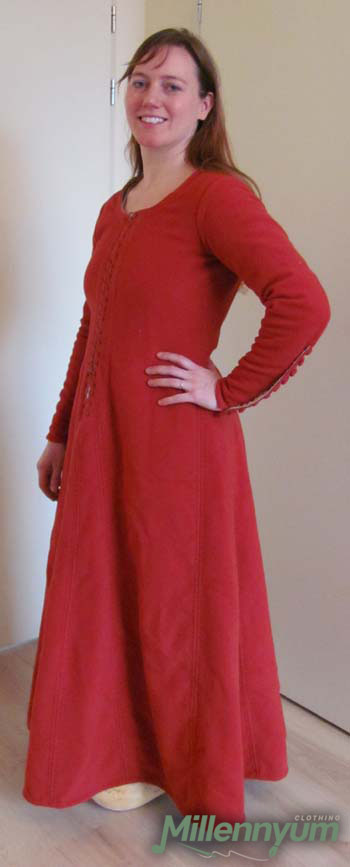
Medieval sleeves had the seam at the back instead of at the bottom, and they put in a small triangle to create more room to move:
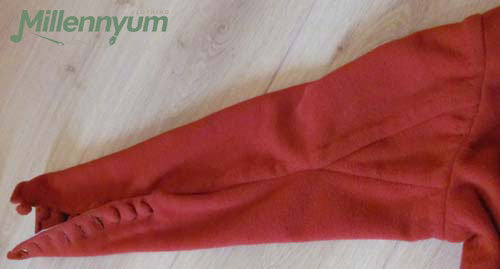
Buttons were located at the side of the sleeve and were often made of fabric, so I hand-made those as well.
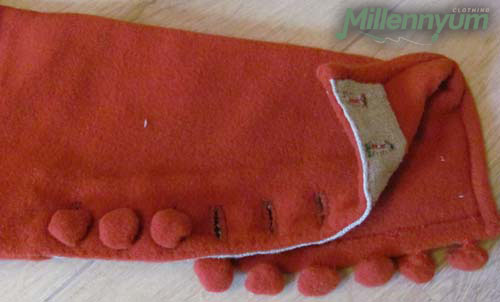
I hope I did everything ‘by the rules’ this time, although ofcourse there’s always debate about what’s historically correct. I already spotted a mistake with the sleeves after putting them on: the button holes should have been on the other side, as now you’re looking into the opening. Oh well… there’s always be something to improve next time!
Related Posts