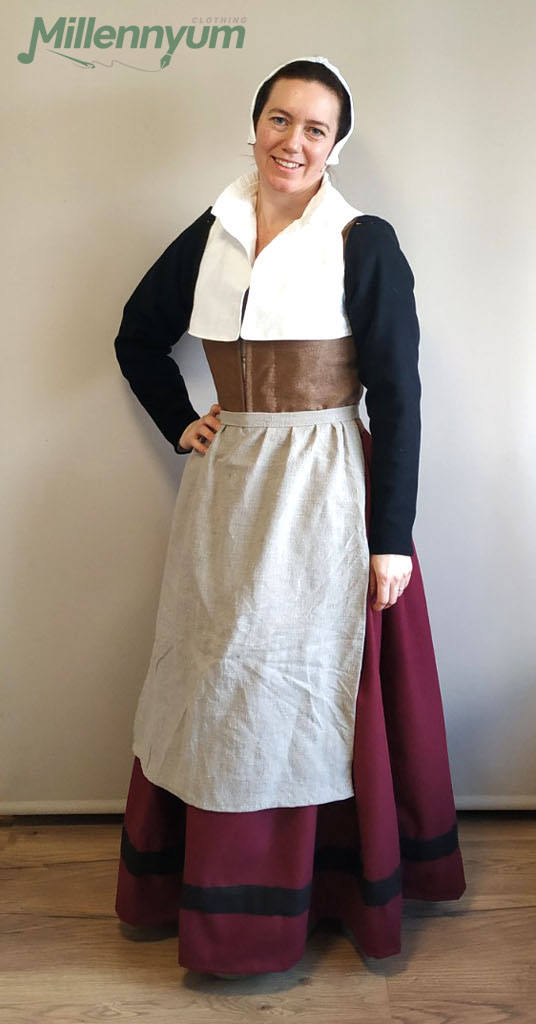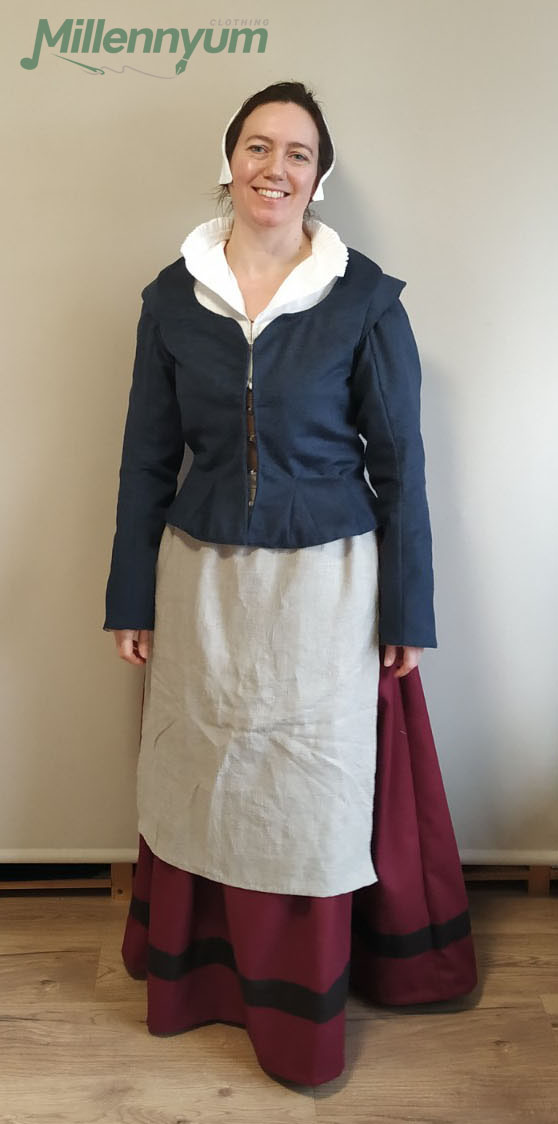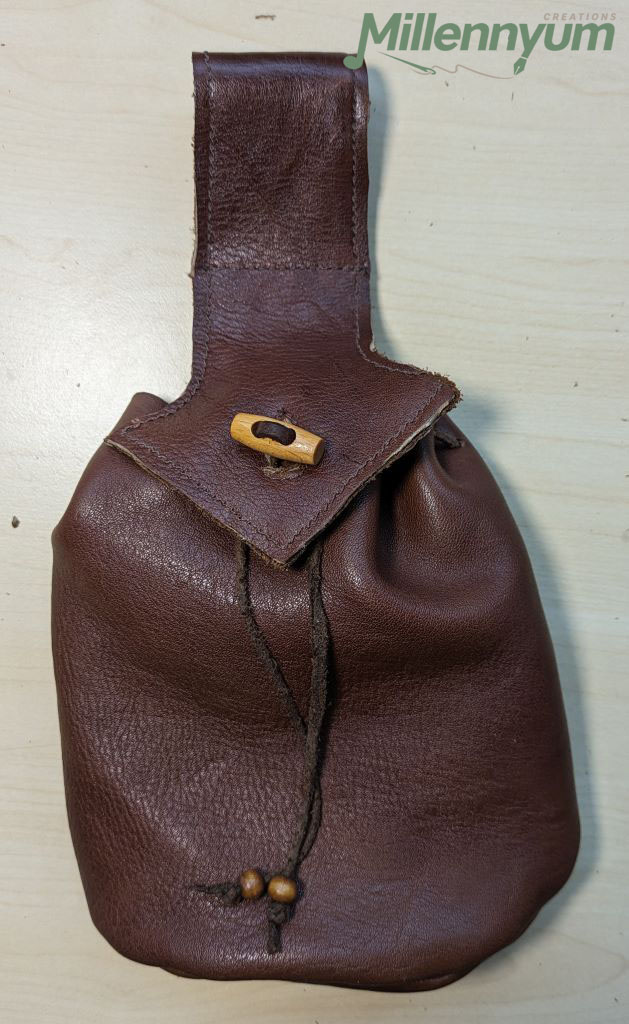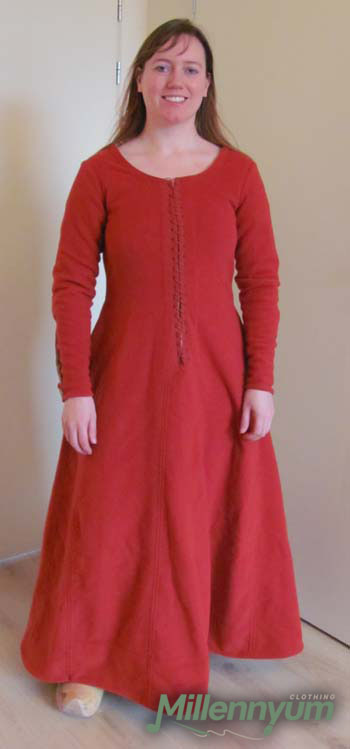
As a medieval band, we sometimes get booked for events in 17th century setting. As I’d rather not show up there in my medieval outfit, and I do not want to keep borrowing garments that don’t fit me well, I needed to sew myself a full 17th century outfit. I started with a kirtle (dress).
The 17th century isn’t a period I’ve delved into very deeply, because to be honest, I don’t find 17th century clothing all that appealing… neither the fancy-schmansy types with those enormous collars and buckles on their shoes, nor the simple rags of the peasants. I am therefore somewhat less motivated to dive into it as deeply as I do into medieval clothing, and have decided that an outfit that broadly meets the guidelines should be good enough.
(‘Broadly meeting the guidelines’ is still according to Lenny-standards, mind you. Meaning: I am using historically accurate fabrics and all visible seams are hand-sewn! But I couldn’t tell you, for example, whether certain elements are specifically from the beginning or middle of that century, or if it’s correct that/how I sewed boning into the bodice, or to what extent/where there was facing on the inside.)
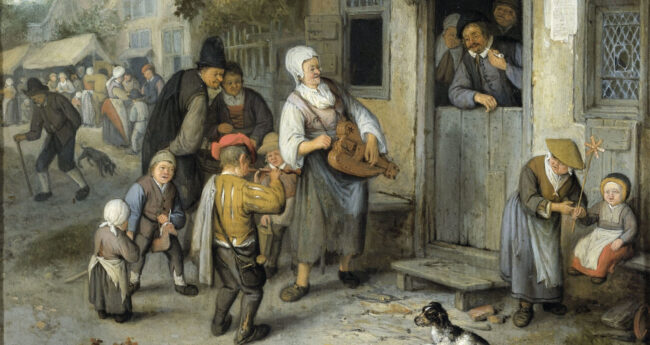
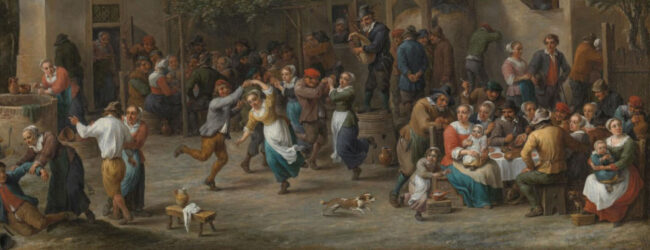
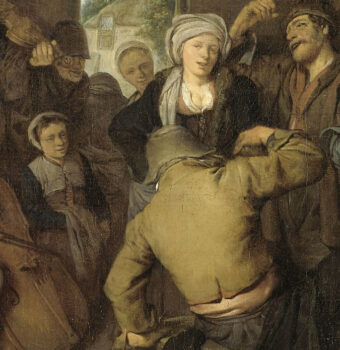
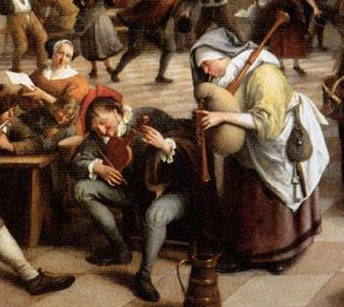
My research therefore consisted mainly of searching the internet for images from that era of the simpler people and musicians. And fortunately, a fellow re-enactor was willing to help me get started with photos of her outfits and a few pages from her pattern book. And I had also carefully studied the clothes I had borrowed in the past.
As a basis for the bodice pattern, I used the pattern I had drawn in the past for my medieval clothing, which is based on fabric pinned to my body. After all, while I am learning to draft modern patterns in my dressmaking studies, this type of clothing has a different shape and fit… I don’t think they used darts back then!
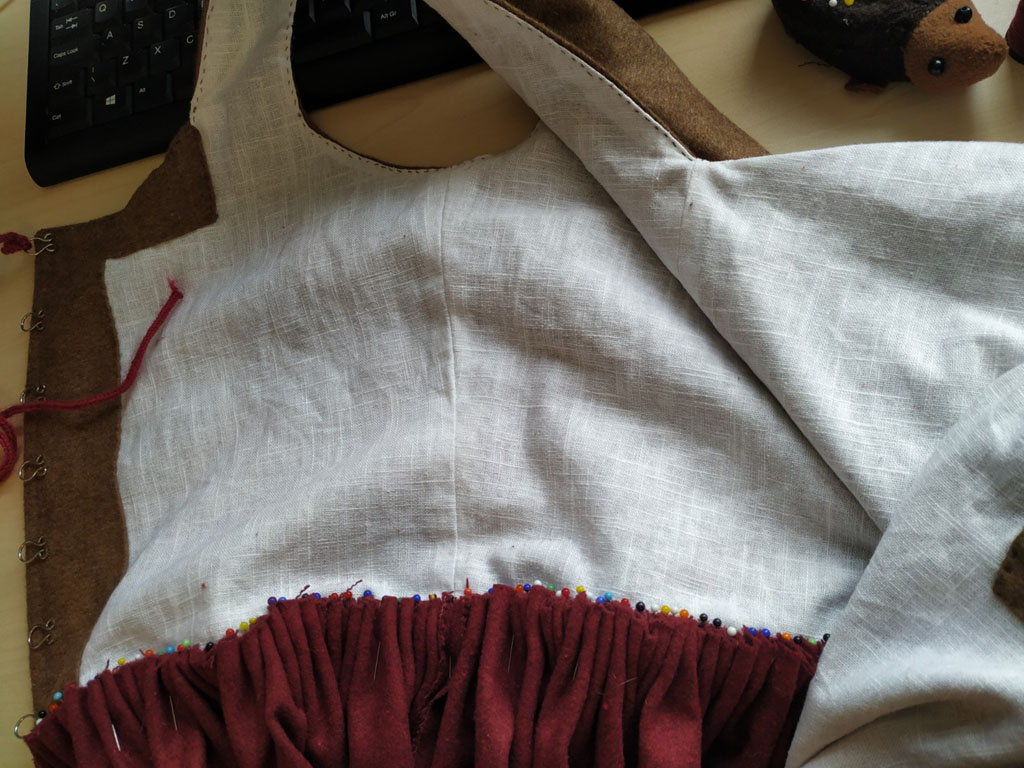
It also meant that making the skirt went a bit differently. Just two straight pieces of fabric, and then pleats, pleats, and more pleats… all of which had to be hand-stitched to the bodice. *sigh*
I also made the cord myself, using a lucet.
The result is pretty good, if I do say so myself. Because even though it doesn’t look good on the mannequin (the thing is a bit wider than me and many times less flexible), it fits me surprisingly well! I usually expect a less good result from the very first version of a new historical outfit!
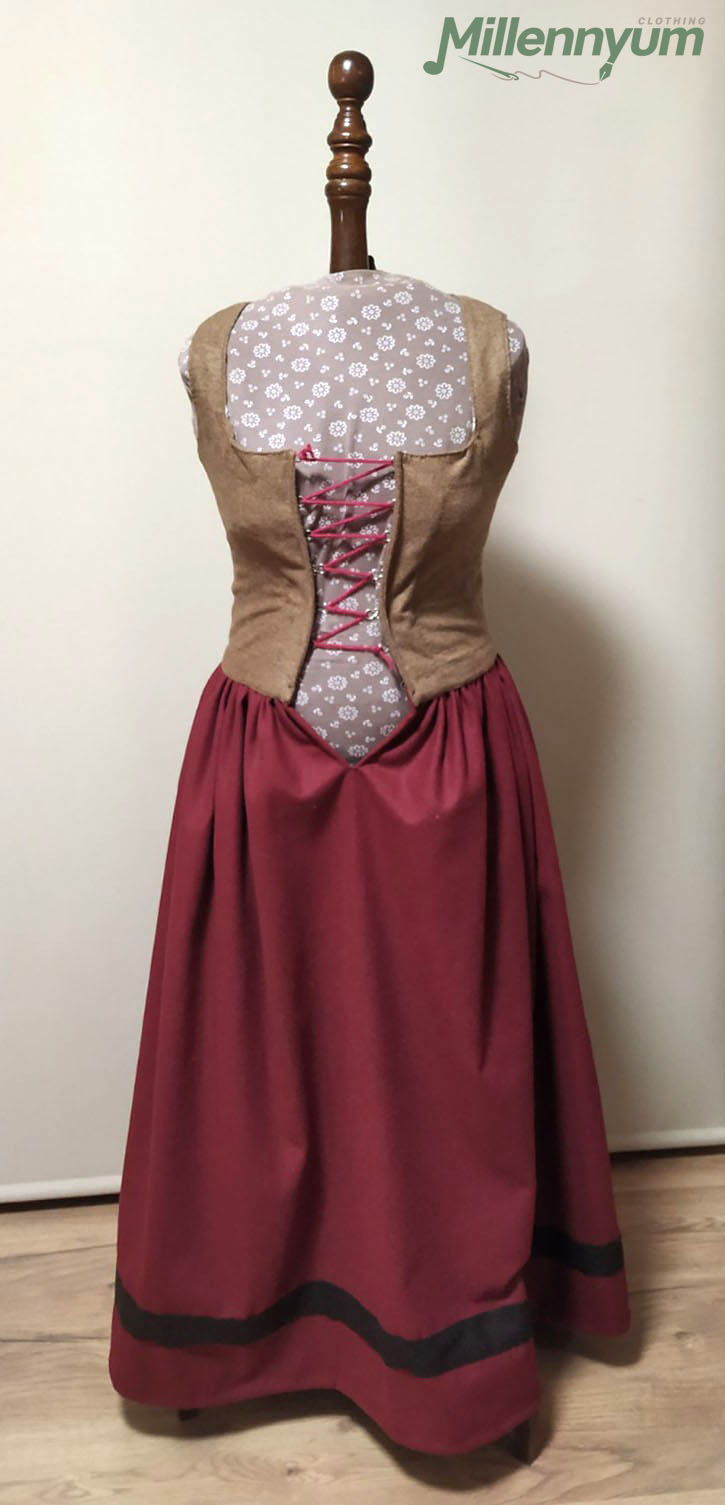
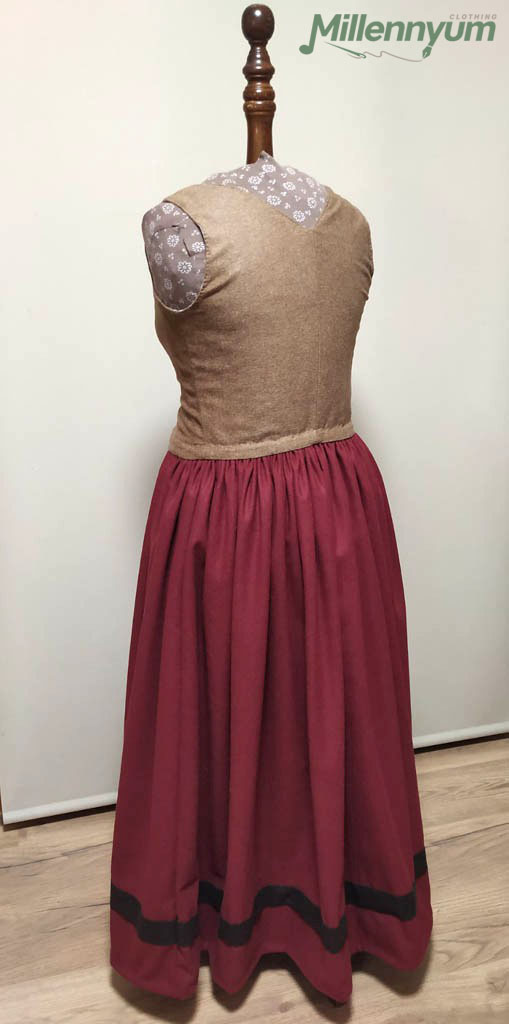
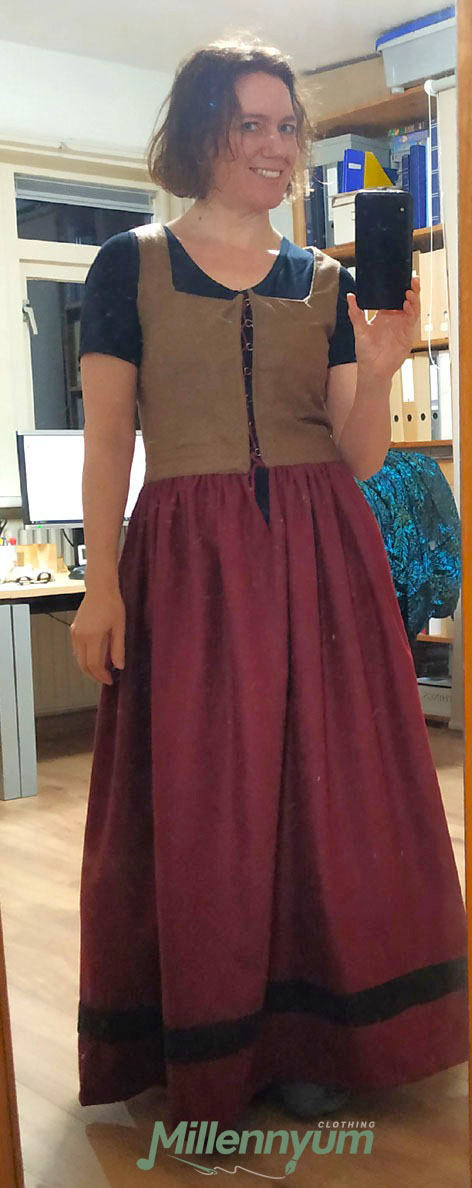
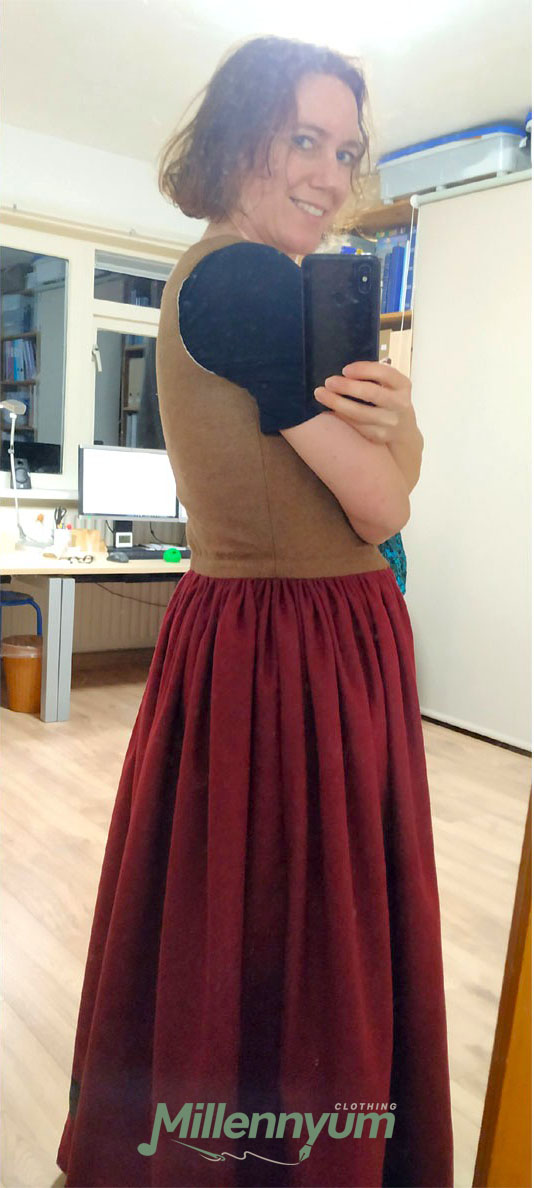
I was afraid that all those pleats at the waist would lead to a huge bulging spot, but that is not the case. There is just a small issue with the boning, which is peeking up in the center front for some reason. That is probably due to the way I sewed on the eyelets and the location and direction where the cord is applying force. I’m going to think about how to fix that for a bit longer.
But at least part one of the outfit is finished! Next phase: a linen shirt to wear underneath and accessories such as a hood, apron, and a bonnet. And then phase 3: a jacket to wear over it when it gets a bit chillier. Stay tuned for updates!
Time spent: not tracked, because I am currently working on multiple costume parts at the same time and, moreover, I am trying to maintain my mental health.
Costs: €63,50 (2 meters of red wool at €15 each, about €15 worth of linen for the lining, two small boxes of hooks and eyes (of which I only used the eyes), a spool of thread, and a roll of boning for €10,50, of which I still have plenty left for next time. I already had the light brown wool for the bodice, the dark brown wool for the skirt band, and the red wool thread lying around.)
Related Posts