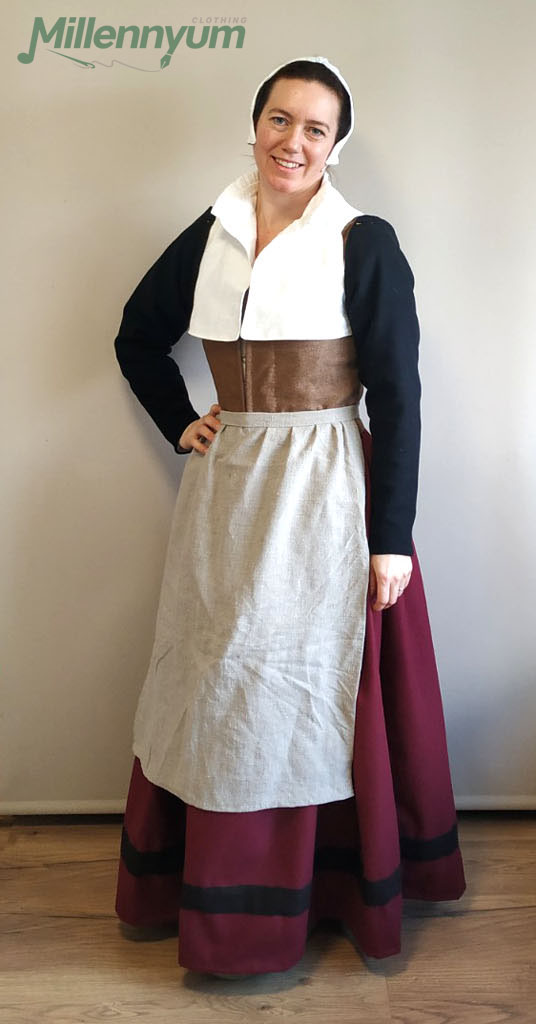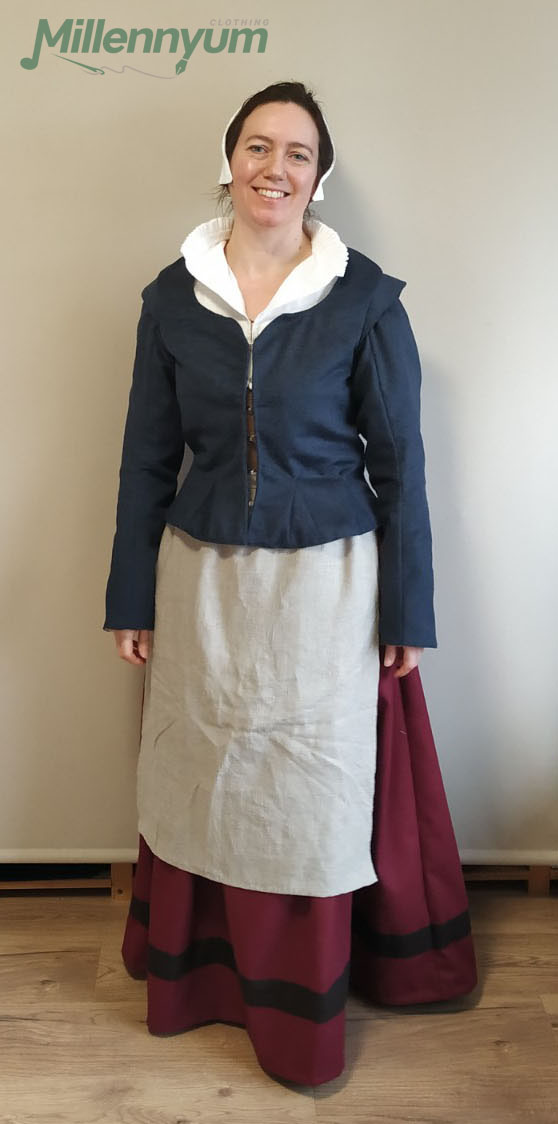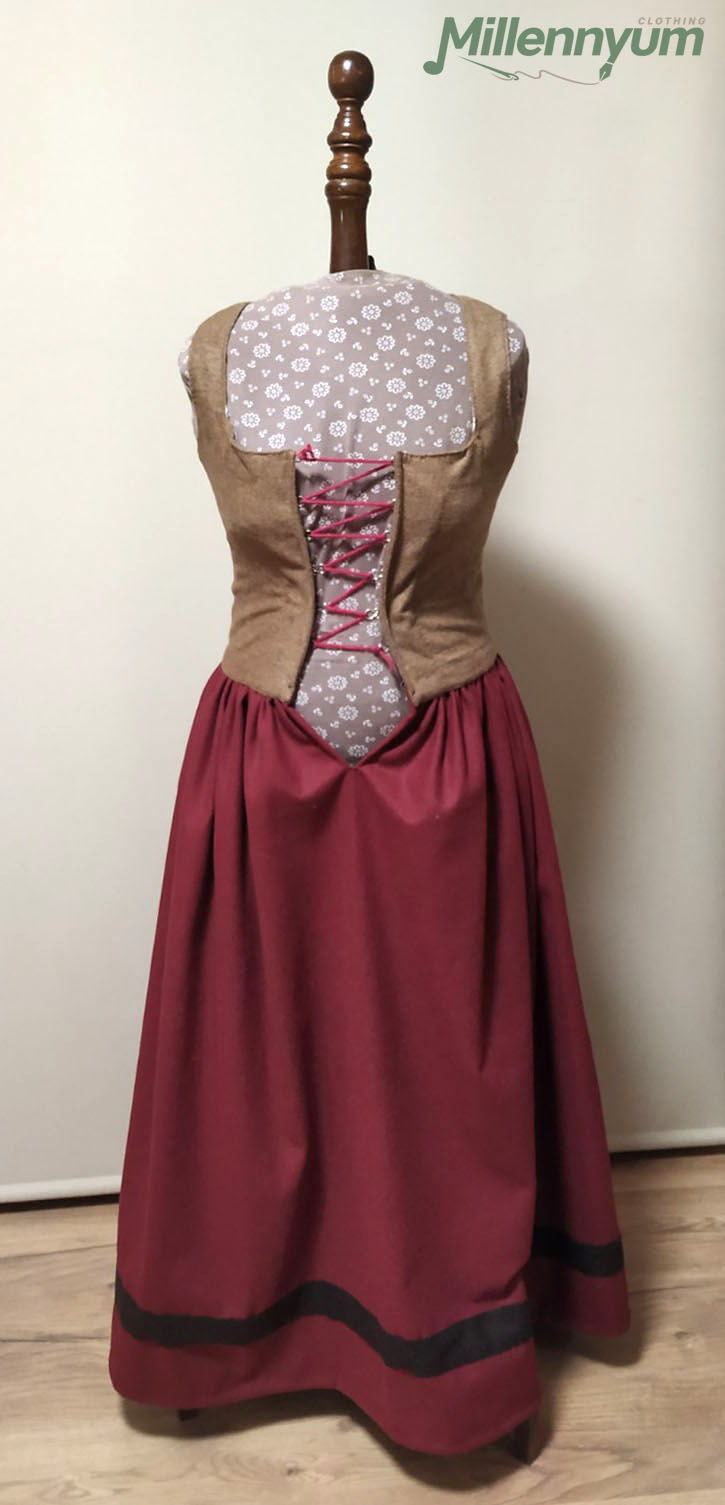
Now that I’ve sewn a 17th century dress, I made a hood to go along with it.
It was much more work than you might suspect. Headwear is so incredibly precise when it comes to fit! During my study as a dressmaker, I learn to draft patterns for garments, but not for headwear (except for hoods attached to the garment), so it is trial and error to get a pattern that fits. Attempt 4 was only roughly right.

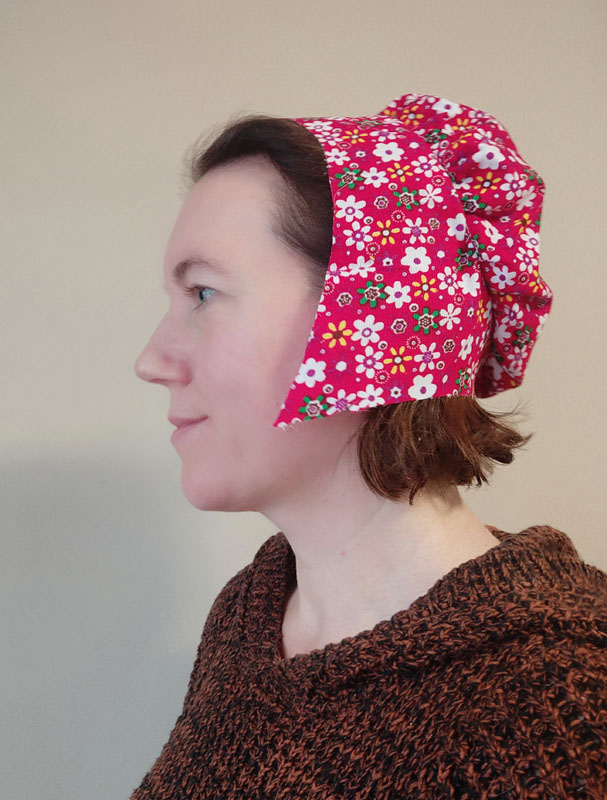
Once I had found a working shape for the cap and was able to sew a final version, I had to figure out how to secure the cap on my head, because it is very small so if I don’t fixate it, I’ll probably end up running after it in the wind. They probably used to pin the hood in place, but unfortunately, with my short hair, I have no way of making a practical bun where pins or combs will hook in properly (it’s going to be a challenge anyway to tuck my hair neatly away under that cap).
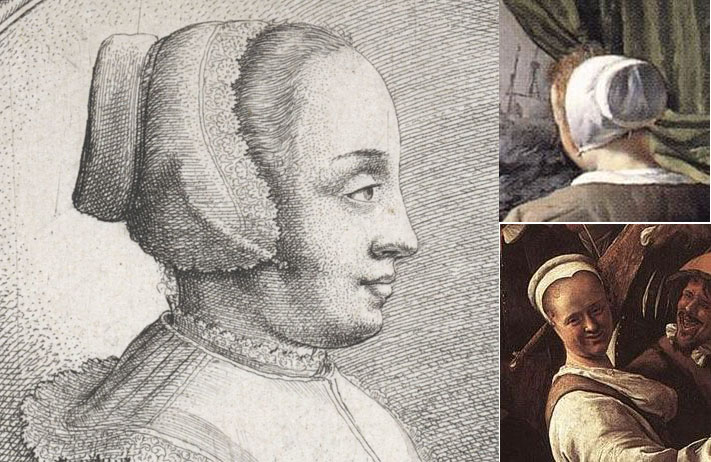
Another option is the ‘oorijzer’, a very Dutch item that translates to ‘ear iron’, which modern people may recognise from traditional Dutch costumes. However, in the 17th century they did not have all the flashy protrusions that were added in later decades. If you look closely at drawings and paintings from that era, you can sometimes see them: a small piece of metal that runs from the back of the head, past the ears, and ends on the cheek. It doesn’t look super comfortable, but perhaps with this thing I’ll manage to keep the cap on my head.

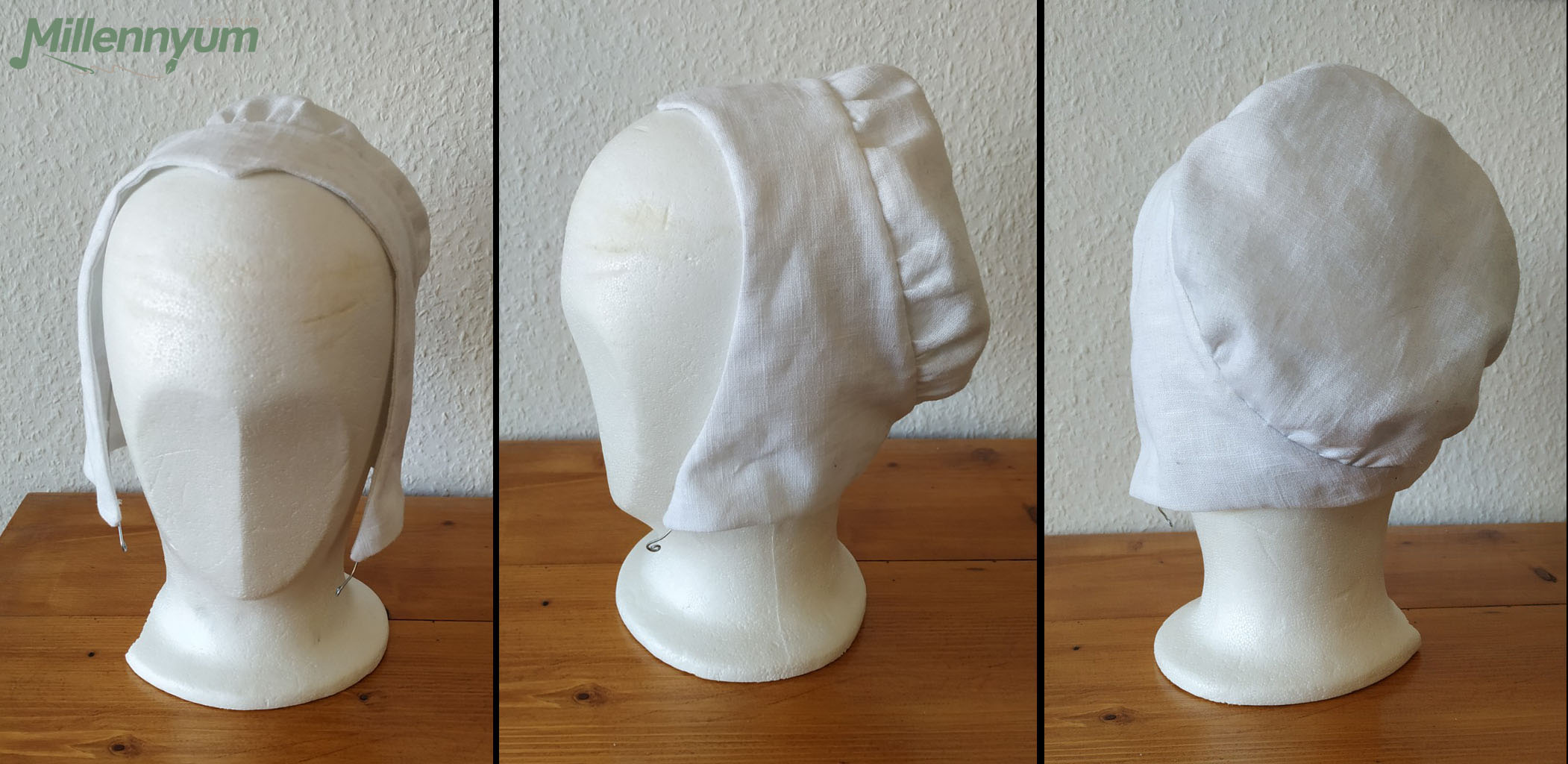
So I cobbled together a prototype out of hat wire. It’s probably not as sturdy as the real thing, but I don’t know which wire would be best to use for this, and I still had this at home. I’m just going to try it out to see how well it works; if it doesn’t work out, I can easily bend a new one.


On the photo above you can see that I attached the oorijzer with small stitches to the cap. But they also used pins to attach them, so that would be an option as well.
Here’s the result displayed on a styrofoam head:
Related Posts